
By Melissa Langworthy, Andrea Mrazova and Natalia Curbelo

Thousands of institutional ethical review boards (IRBs), human research ethics committees (HRECs), and other ethical review institutions operate worldwide. In the United States, over 2,300 IRBs are run by more than 1,800 organisations, with most based in universities. Of those registered with the Office of Human Research Protections (OHRP) in the United States, only two per cent operate independently (for example, outside of university, hospital, or government institutions); 56 per cent are managed by universities, eight per cent are government-run, and 10 per cent are privately managed. Recent research also shows that consolidation has reduced the number of independent ethical review boards.
This concentration of ethical review board activities within a small segment of institutions hides the complex reality that research standards vary considerably around the world. Globally, IRBs and other types of ethical review boards operate in more than 80 countries and adhere to more than 1,000 human research standards. Much of this diversity reflects the origins of IRBs, which were initially developed to address medical research, making many guidelines and protocols less relevant to social and behavioural research. Within this variation, IRBs and other ethical review boards differ in structure, processes, and outcomes. However, the research frameworks, logics, and assumptions that shape ethical research continue to be driven by regulatory policies and practices that are “exported from the global North to the South as part of the flows of capital and academic labour.”
From this perspective, the ethical review board plays a critical role in shaping and reinforcing power imbalances and extractive protocols, especially when global North expertise (often university researchers or development consultants) is valued over local knowledge and approaches grounded in participant and community expertise. As such, each ethical review board must be considered both a gatekeeper of new knowledge and an enforcer of research protocols.
Includovate recognises this responsibility, as it operates an ethical review board that reviews applications and grants ethical clearance for projects worldwide. As a research organisation committed to inclusion and innovation, Includovate sees firsthand the many ways that traditional ethical review board processes sit in tension with efforts to promote more inclusive research methods. For example, inclusive research methodologies—especially those centring community-based and other participatory methods—often struggle to receive clear, informed guidance from an ethical review board when board members have little experience with them.
At the same time, the rapid development of new data collection techniques, especially those using digital methodologies, data sources, and emerging data technologies, has not always been matched with strong ethical protection processes. Within this environment, IRBs and other ethical review boards gain a reputation for being cumbersome and outdated while also lacking a clear understanding of emerging methodologies, especially qualitative research methodologies. To fully utilise innovations in human research processes and protocols, the ethical review board must be recognised as a critical actor in transforming research processes and ensuring high levels of ethical standards that not only keep up with methodological evolution but also support the value and efficiency of inclusive research methodologies


Historical roots of ethical review boards Foundational ethical violations
IRB protocols and systems were born from necessity. In one foundational example, the Tuskegee Syphilis study withheld penicillin, a known remedy for the disease, from poor Black sharecroppers in the United States so that researchers could observe the progression of the disease. In response to this and many other infractions, governments and institutions introduced a series of policies to shape the ethical treatment of human subjects in research studies (see Box 1). These policies now shape medical and social science research alike and underpin the contemporary ethical review board
Box 1: Foundational Ethical Research Policies
Belmont Report: Issued in 1979, outlines three priority concerns for research, including: respect for persons (autonomy and informed consent), beneficence (balancing benefits and risks), and justice (fair distribution of risks and benefits).
Common Rule: A series of US federal policies that codified the Belmont Report principles in 1991 and was revised in 2019.
Declaration of Helsinki: Established by the World Medical Association in 1964 and updated in 2024. It is a statement of ethical principles that centres the health, well-being and rights of participants in all research protocols.
From ethics enforcement to knowledge gatekeeping
Given this history, it becomes clear that the ethical review board is more than just an arbiter of research ethics. Each ethical review board also represents institutional and cultural norms around objectivity and knowledge creation that are influenced by—and in turn reproduce—the racial-colonial entanglements of universities, development organisations, donors, and other stakeholders. These entanglements appear, for example, in evaluation protocols shaped by the global development agenda and its long-standing power imbalances.
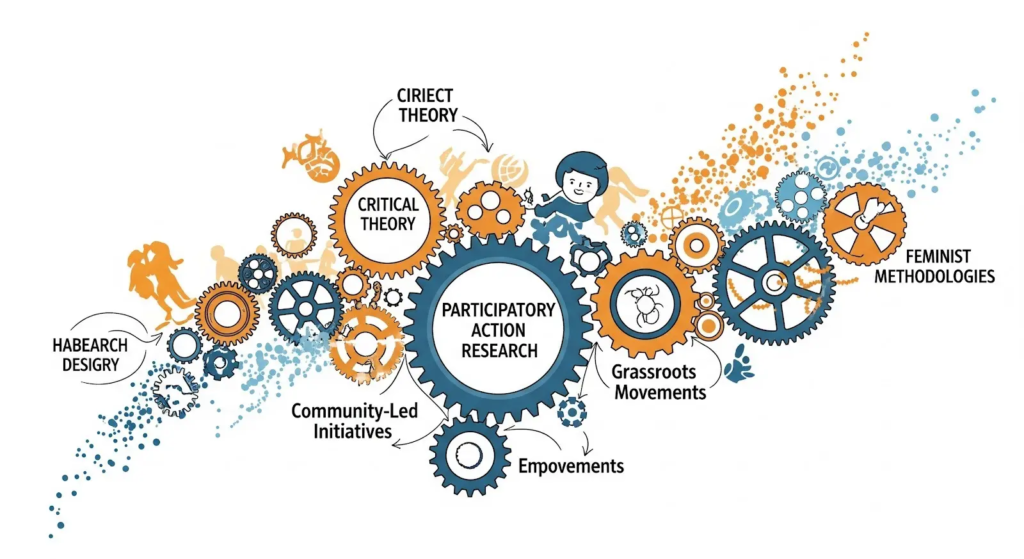
In the biomedical research realm, traditional research designs often fail to support qualitative and participatory research methods, especially when contract-style informed consent procedures clash with the ongoing, negotiated, and relational processes these methodologies require. In this way, the ethical review board can unintentionally marginalise innovative or community-led methods while favouring standardised, institutionally familiar approaches.


Coloniality, power, and ethical review boards Exporting ethics and erasing local systems
These racial-colonial entanglements also appear in the structure of many research projects, especially those related to development practices and programs. The terms’ parachute’ or ‘helicopter’ research refer to a common development research pattern in which researchers from the global North rely on global South researchers, local enumerators, or community members to gather data, then analyse and attribute that data solely to global North researchers without sharing credit or results with local researchers or community members. Such practices contribute to broader patterns where global North researchers and institutions export academic labour, capital, research ethics, and regulatory policies and practices to the global South.
Within these flows, research practices and ethical values are produced in the global North and framed as “universal” ideals of ethical treatment of individuals. These so-called universal standards often exclude other available ethical systems, build on institutionalised power differentials, and fail to recognise their contribution to colonial and neo-colonial experiences. An ethical review board that relies uncritically on these universalised norms risks upholding “ethical imperialism” rather than promoting genuine ethical pluralism.
Institutional risk versus participant protection
IRBs and other ethical review boards also attract criticism for their perceived role in creating bureaucratic processes geared primarily towards protecting the supporting institution (often a university) from risk. From this position, the ethical review board is caught between protecting the legal liabilities of institutions and protecting the rights and interests of research participants. This tension becomes even more pressing as new digital technologies emerge and ethical review boards must address risks associated with AI algorithms and other computational technologies that threaten privacy and the transparency of research processes. For example, IRBs often have little procedure to address data sovereignty rights. Data sovereignty ensures that a group or individual has the right to control or maintain their own data, including its collection, storage and interpretation by researchers. This can also include treatment of photos taken during research implementation that are not managed with continuing informed consent and control by the participants in the use of their image.
Empowering ethical review boards for inclusion Reframing core questions and relationships
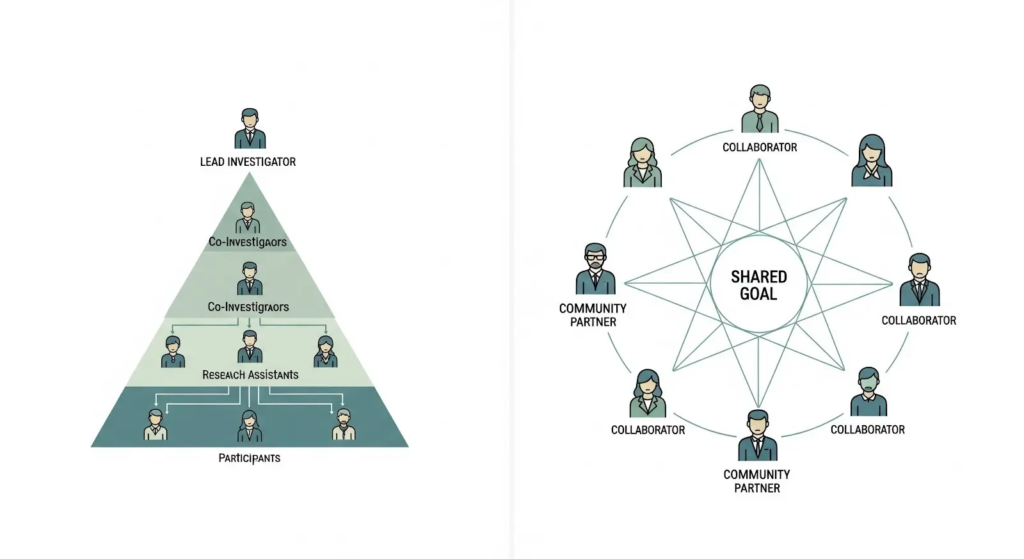
Despite these challenges, many avenues exist to redirect ethical review board practices so they contribute to, rather than impede, inclusive research. Primary among these is the potential for each ethical review board to emphasise work with local researchers, institutions, participants, and other stakeholders, along with strategies to learn from, acknowledge, and design for local knowledge and contexts. Correspondingly, ethical review boards need to ask different questions about ethical practices and risks, including:
- Who benefits and how?
- What forms of value are extracted, and how does this value become authorised and circulated?
- What are the processes that make some people researchable?
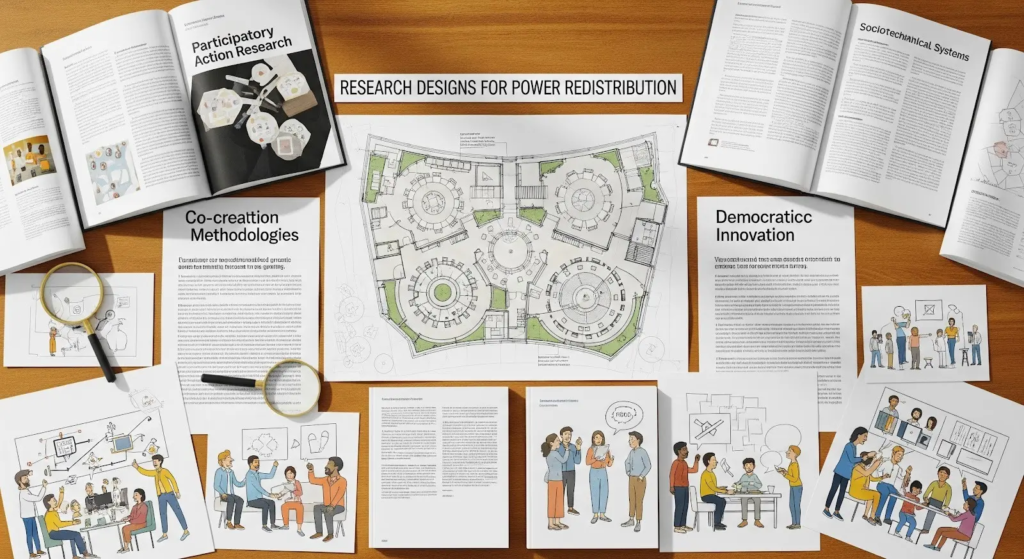
By centring these questions, the ethical review board can better identify extractive dynamics and support research designs that redistribute power.


Building capacity and recognising community risks
Other strategies include building the capacity of ethical review boards and their members to act on diverse research processes, especially those normally considered outside institutional research practices, such as Indigenous, inclusive, and localised research practices. One critical strategy involves recognising risks to communities and not just individuals, and improving awareness of community-based and participatory research methods, including their risks and benefits for the research process. Another strategy is to more prominently consider the experiences of local staff members and researchers, especially experiences related to safety, emotional stress, and working conditions in any proposed research project.
Closely related to this is the need to respect the rights of community members and other research participants to receive the findings and intended outcomes of the research that draws on their lived experiences and perspectives. For example, growing numbers of community groups now implement their own review processes to determine whether and how research takes place in their communities. These community-led mechanisms, when recognised and engaged by ethical review boards, can significantly transform how ethical review operates.
Practical steps for transformative ethical review boards Actions for institutions and board members
Taken together, these insights suggest several ways that IRB institutions, ethical review boards, and their members can help enact more inclusive and ethical research practices even as methodologies evolve and include new technologies and formats.
An ethical review board can:
- Reinforce local approaches and legitimise local knowledge systems, including by cultivating relationships with local review processes where relevant.
- Promote active institutional commitments to resource and support forms of knowledge that shift power relationships and explicitly consider power dynamics in proposed research studies.
- Promote inclusive research practices in studies under review, including community participation from inception to reporting phases and explicit consideration of local views, values, and knowledge systems.
- Encourage ethical regulation across a broader range of institutions, enabling greater inclusion of ethical review board members and reviewers.
- Focus on capacity building among ethical review board members to promote transformative research, including meaningful community inclusion and direct acknowledgement of power imbalances.
- Document and share IRB learnings and best practices that identify and support ethical review boards—and related mechanisms—as proponents of ethical, inclusive, and innovative research that also transforms structures of power and knowledge.
At Includovate, our ethical review process focuses on utilising our IRB processes to promote greater inclusivity and redefine the power relationships that are often replicated in development research.
References
Bell, K. (2014). “Resisting commensurability” Against informed consent and an anthropological virtue.” American Anthropologist, 116, pp. 511-522.
Guta, A., Wilson, M., Flisker, S., et al. (2010). “Are we asking the right questions? A review of Canadian REB practices in relation to community-based participatory research.” Journal of Empirical Research on Human Research Ethics, 5(2), pp. 35-46.
Israel, M. (2017). “Ethical Imperialism? Exporting research ethics to the Global South.” In Iphofen, R., & Tolich, M (eds) The SAGE Handbook of Qualitative Research Ethics. London. Sage.
Kaplan, L., Kuhnt, J., & Steinert, J. (2019). “Ethics in development research: ‘Doing no harm’ to research staff when conducting research in low and middle-income countries.” German Development Institute.
Khumalo, S. (2022). “The effects of coloniality and international development assistance on MAde in Africa Evaluation Implications for a decolonised evaluation agenda.” African Evaluation Journal, 10(1).
Masso, A., Gerassimenko, J., Kasapoglu, T., & Beilmann, M. (2025). “Research ethics committees as knowledge gatekeepers: The impact of emerging technologies on social science research.” Journal of Responsible Technology, 21.
Ng, C., Ting, S., Saifi, R., & Kamarulzaman, A. (2023). “Ethical Issues in Photovoice Studies involving key populations: A scoping review.” Asian Bioethics Review 16(1) pp. 109-129.
Odeny, B. & Bisurgi, R. (2022). “Time to end parachute science.” PLoS Med. 19 (9).
Sabati, S. (2018). “Upholding ‘colonial unknowing’ through the IRB: Reframing institutional research ethics.” Qualitative Inquiry.
Shore, N., Drew, E., Brazauskas, R., & Seifer, S. (2011). “Relationships between community-based processes for research ethics review and institution-based IRBs: A national Study.” Journal of Empirical Research on Human Research Ethics, 6 (2), pp. 13-21.
Tamariz, L., Medina, H., Taylor, J., et al. (2015). “Are research ethics committees prepared for community-based participatory research?” Journal of Empirical Research on Human Research Ethics, 10(5), pp. 488-495.
Tegama, N. & Fox, A. (2023). “Ethics, university, and society: Toward a decolonial approach to research ethics” in Alliance for African Partnership Perspectives pp. 75-92.