
Dr. Kristie Drucza
Over the past decade, a well‑organised (but not centralised) “anti‑gender” movement has become a significant global challenge for gender equality, reproductive rights, and LGBTQI rights (Korolczuk et al., 2025; Global Philanthropy Project, 2021). It is already influencing politics, media, and everyday life across Asia‑Pacific, Europe, Latin America, and beyond, reshaping the environments in which organisations like Includovate and our partners work (Carnegie Endowment, 2025; IWRAW Asia Pacific, 2024).
This piece takes a closer look at how the movement operates, what is at stake if current trends continue, and how people and organisations are finding constructive ways to respond (Korolczuk et al., 2025; HRW, 2025).

A well‑resourced backlash
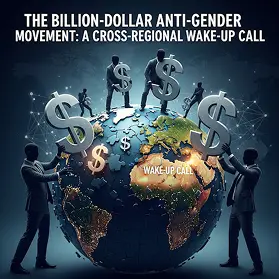
This movement is not just a few loud voices online; it is supported by substantial funding from religious foundations, ultra‑conservative donors, political parties, and “family values” groups (Global Philanthropy Project, 2021). In Europe alone, research has documented hundreds of millions of dollars flowing to anti‑gender organisations, while many feminist and sexual and reproductive health groups work with limited and short‑term funding (European Parliamentary Forum, 2025).
Money is only part of the picture. Anti‑gender networks use diplomatic relationships, funding channels, court cases, and media campaigns to influence laws and public opinion, often coordinating across borders (Global Philanthropy Project, 2021). These patterns point to a sustained political project rather than a temporary backlash (Korolczuk et al., 2025).
How the movement works
Across different countries, anti‑gender actors adapt their messages to local cultures, but their strategies are strikingly similar (Korolczuk et al., 2025). Common tactics include:
- Sharing misleading information about comprehensive sexuality education, gender identity, and reproductive rights, often through social media and community networks (IPPF, 2024).
- Promoting laws and policies that restrict access to abortion, contraception, LGBTQI+ rights, and gender studies programs (Carnegie Endowment, 2025).
- Targeting activists—especially women, LGBTQI+ people, and young leaders—with harassment and online abuse, which can discourage participation in public life (HRW, 2025).
- Framing human rights as “Western” or “colonial” ideas that threaten local traditions, even when local movements have long histories of organising for equality (IWRAW Asia Pacific, 2024).
These efforts build on existing problems such as political instability, economic insecurity, and polarised information spaces, making it easier for fear‑based messages to spread (Carnegie Endowment, 2025; IPPF, 2024).

Asia‑Pacific: patterns and warning signs
In the Asia‑Pacific region, anti‑gender mobilisation has local faces, histories, and religious contexts, but it remains linked to global narratives and networks (IPPF, 2024; IWRAW Asia Pacific, 2024). Researchers have documented efforts to limit comprehensive sexuality education, resist anti‑discrimination laws, and frame gender equality as a foreign agenda across a range of countries (Bell School ANU, 2023; Carnegie Endowment, 2025).
Examples from Indonesia, the Philippines, South Korea, Japan and Myanmar show that debates over gender and sexuality are closely tied to broader struggles over democracy, security and national identity (Bell School ANU, 2023; IWRAW Asia Pacific, 2024). These cases suggest that Asia‑Pacific is not on the sidelines of this debate, but one of the regions where new strategies—both for backlash and resistance—are being tested (IPPF, 2024; Korolczuk et al., 2025).
What is at stake if trends continue?
If current trajectories continue without thoughtful responses, there are real risks for people and societies (Carnegie Endowment, 2025). These risks include:
- Reduced rights and services: Harder access to abortion and contraception, weaker reproductive health services, and harsher laws affecting LGBTQI+ people (Carnegie Endowment, 2025).
- Increased pressure and division: More hate speech, tighter control over women’s and girls’ lives, and greater hostility towards LGBTQI+ communities and other marginalised groups (HRW, 2025; IWRAW Asia Pacific, 2024).
- Strain on democracies: Policies and practices that normalise discrimination, limit space for civil society, and undermine trust in institutions (Carnegie Endowment, 2025; Bell School ANU, 2023).
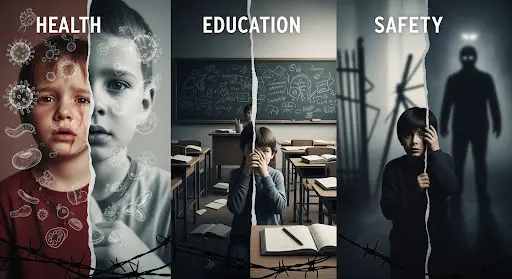
- Harm to children and young people: Cuts or bans on comprehensive sexuality education and reproductive health services leave young people with less information to protect their health, safety and relationships (IPPF, 2024).
- Funding reductions for poverty reduction, education, health and violence against women.
These are early warning signs, not inevitable outcomes. Many communities, organisations and movements are already working to protect rights, build dialogue, and find inclusive solutions (HRW, 2025; IWRAW Asia Pacific, 2024).
Why a strategic response is needed
There are significant imbalances in power, resources and visibility between anti‑gender actors and many rights‑based organisations (Global Philanthropy Project, 2021; HRW, 2025). Anti‑gender groups are often well‑resourced, present in key institutions, and highly active online, while many organisations working for gender equality, SRHR and LGBTQI rights are underfunded and operating under pressure (Carnegie Endowment, 2025; IPPF, 2024).
Addressing this requires long‑term, coordinated strategies such as:
- Building broad alliances between feminist, LGBTQI, youth, climate, labour and democracy movements within and across countries, so that no group faces backlash alone (HRW, 2025).
- Investing in digital safety, fact‑checking, and positive, relatable storytelling—not only in legal advocacy or service delivery (IPPF, 2024).
- Designing programs that expect backlash, protect activists, and monitor anti‑rights activities alongside tracking positive change (HRW, 2025).
- Encouraging donors and governments to provide flexible, long‑term funding to organisations closest to affected communities, especially in the Global South (Carnegie Endowment, 2025; Global Philanthropy Project, 2021).
These steps treat the anti‑gender movement as a strategic, organised effort that calls for equally strategic and organised responses (Korolczuk et al., 2025).
What you can do
The anti‑gender movement often grows when people feel isolated, discouraged, or unsure about what is really going on—but many practical actions are already making a difference (HRW, 2025). Everyone can play a part:
- Talk about it: Share balanced, evidence‑based information with friends, family, and colleagues, and gently challenge misleading narratives when they appear (IPPF, 2024).
- Support organisations: Donate to or volunteer with feminist, LGBTQI, youth, and human rights groups in your community and region (HRW, 2025).
- Use your online voice: Follow and amplify trusted rights‑based organisations, and help report or counter misinformation and hate speech on social media (IPPF, 2024).
- Ask where the money comes from: Question who funds political campaigns, think tanks and “family values” groups, and support calls for greater transparency (Global Philanthropy Project, 2021; European Parliamentary Forum, 2025).
- Create spaces for conversation: Host or join discussions in workplaces, schools, community groups and online that make room for respectful dialogue and shared problem‑solving (IWRAW Asia Pacific, 2024; Bell School ANU, 2023).
At Includovate, this means partnering with people most affected by these dynamics, grounding research in their lived realities, and using evidence to help shape smarter, collective responses (Carnegie Endowment, 2025; HRW, 2025). The struggle over gender, rights and democracy is global—but so is the opportunity to act early, thoughtfully and together
References
Bell School ANU 2023, Anti‑gender mobilisation in Indonesia and its implications, Australian National University, Canberra.
Carnegie Endowment 2025, The new global struggle over gender, rights, and family, Carnegie Endowment for International Peace, Washington DC.
European Parliamentary Forum 2025, Inside Europe’s billion‑dollar anti‑gender movement, European Parliamentary Forum for Sexual and Reproductive Rights, Brussels.
Global Philanthropy Project 2021, Understanding the resourcing of the global anti‑gender ideology network, Global Philanthropy Project, New York.
HRW 2025, Feminist foreign policy during a global backlash, Human Rights Watch, New York.
IPPF 2024, Shedding light on anti‑rights actors in the Asia‑Pacific region, International Planned Parenthood Federation, London.
IWRAW Asia Pacific 2024, LGBTIQ: Anti‑gender movement in Asia‑Pacific, International Women’s Rights Action Watch Asia Pacific, Kuala Lumpur.
Korolczuk, E, Graff, A & Kantola, J 2025, ‘Gender danger: Mapping a decade of research on anti‑gender politics’, Journal of Gender Studies, vol. 34, no. 5, pp. 621–640, https://doi.org/10.1080/09589236.2025.2489584.