
Andrea Mrazova
Introduction
I have been questioning how mainstream research methods, as promoted by Western or Global North institutions, align with or serve the needs of Indigenous populations. One of the organisations active in the field is Australia’s National Research Organisation for Women’s Safety Limited (ANROWS) The work of this organisation inspired me to think about the ways in which Western researchers use mainstream research methodologies to collect and interpret data. Recently, more and more donors are invested in using participatory methods and processes – but are these really reflecting enough the needs of Indigenous populations and how they are consulted?
As someone who grew up and studied in Europe, I recognize that my perspective has been shaped within this field of view. However, I aim to engage with Indigenous methodologies in a way that is guided by principles of respect, ethical practices and commitment to recognize Indigenous knowledge systems that are deeply rooted in their spiritual and cultural contexts. Indigenous peoples embody a vibrant diversity of cultures, languages, and knowledge systems that have evolved over thousands of years. Their ways of knowing, being, and interacting with the world hold immense value as they offer context-specific insights for addressing local and global challenges such as climate change, biodiversity loss, and cultural preservation, yet they have often been marginalised in mainstream research processes. Indigenous peoples have unique ontologies and worldviews that stem from their continuing connection with nature and the spiritual world that altogether shape their cultural practices including their approach to collaborating with stakeholders. We need to work with them to carefully co-create the topics, methods of data collection, methods of data analysis and how we present the research findings.
What are Indigenous methodologies and why do they matter?
Indigenous research methodologies are sets of interpersonal and experiential approaches developed by Indigenous peoples in response to their own ways of being, thinking and doing. They are in contrast with mainstream approaches that tend to prioritise objectivity and detachment. From a feminist perspective such as standpoint theory, knowledge is always socially situated, making claims of pure objectivity impossible. Linda Tuhiwai Smith´s quote that: “The word itself, ‘research’, is probably one of the dirtiest words in the Indigenous world’s vocabulary” underscores the historical exploitation, misrepresentation, and harm caused by colonial research practices. Historically, research often objectified Indigenous peoples, extracted their knowledge without consent, and perpetuated stereotypes positioning them as undeveloped (savages) while failing to benefit the communities involved. Indigenous peoples were frequently treated as subjects to be studied, categorised, and analysed, rather than as active participants with agency and wisdom.

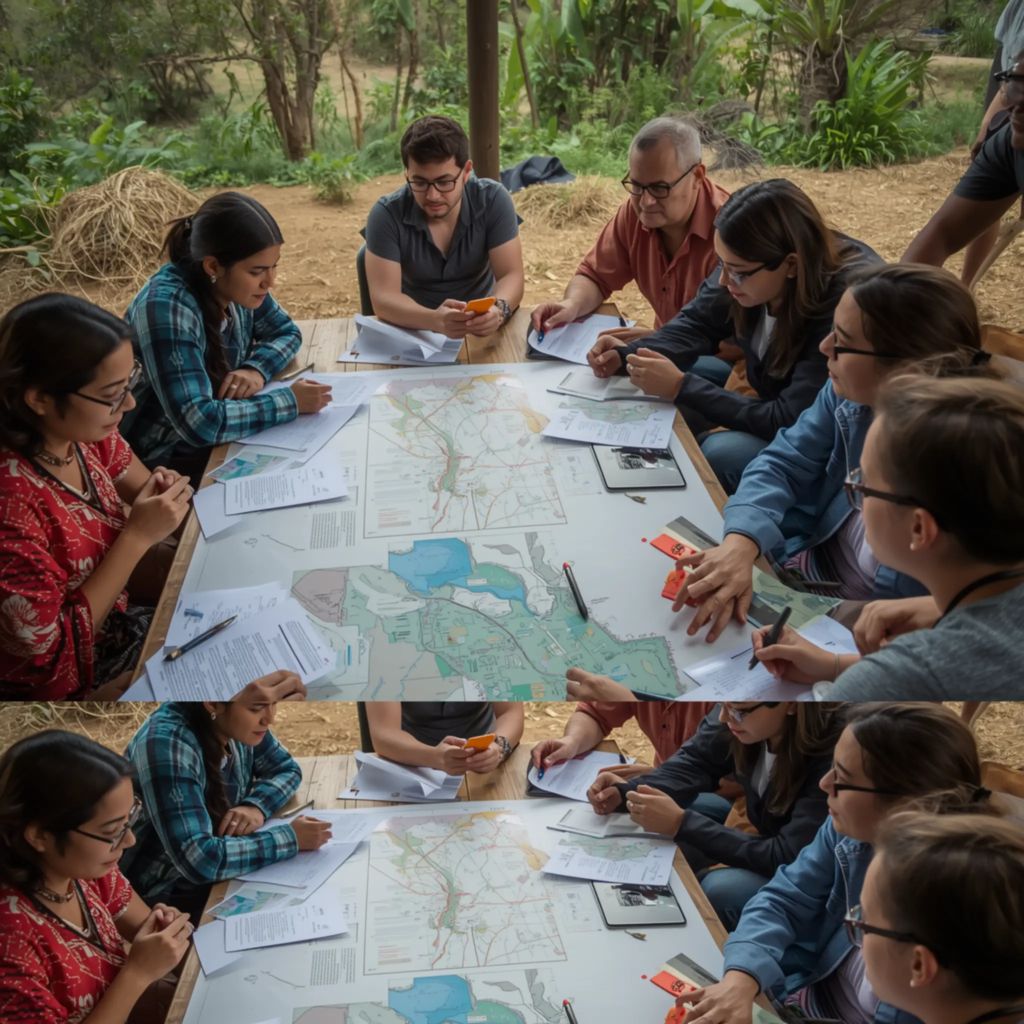
Various researchers demonstrate that it is important to have Indigenous peoples to lead research activities, including decisions on research topics and priorities. Some examples of these are including Indigenous groups as Advisory Group contributing their ideas to design the project and using qualified enumerators trained in storytelling methods to collect data. It is important to approach Indigenous communities safely, recognizing their value systems and reserving enough time to build relationships with their elders and show them respect in the process of listening to them, instead of focusing on a predetermined set of questions. It is equally important to address the research fatigue in some communities in order not to retraumatise them by asking the same questions over and over again. Some communities also complain of being questioned, but not seeing any results back from it. Involving Indigenous communities in the research process means rethinking the positions of power and giving people the power to lead. This empowerment fosters self-determination, enabling Indigenous peoples to reclaim control over their narratives and knowledge systems. It also helps to address power imbalances that have historically marginalised Indigenous voices in academia and policymaking.
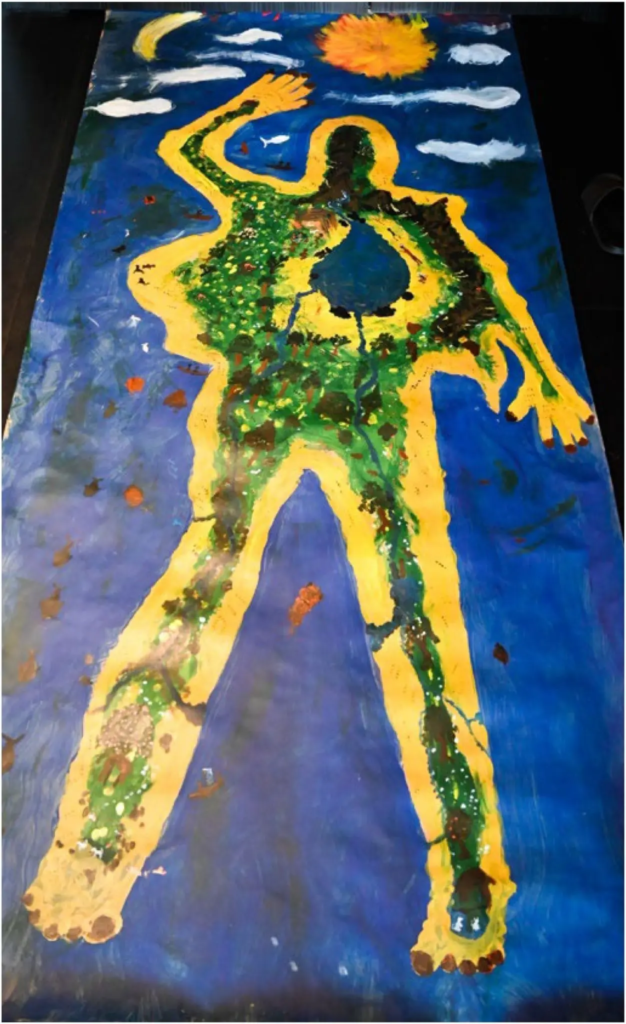
Another example of Indigenous methodologies is using visual and artistic methods, like Art Yarning to explain connections to the land in a research context and to communicate complex ideas in culturally resonant ways. The method of Two-Eyed Seeing (Etuaptmumk), developed by Mi’kmaq Elder Albert Marshall in Canada, is a framework that combines Indigenous and Western knowledge systems, recognising the strengths of both.
.(Photo: Art Yarning Painting ‘The Islands We Are’, Paul (2016) Source: Assoulin, E. (2023). Art Yarning: On an Integrated Social Science Research Method. Journal of Intercultural Studies, 44(5), 734–759. https://doi.org/10.1080/07256868.2023.2229103)
Indigenous methodologies can be used not only in the data collection process, but also in the data analysis process. For example Tyson Yunkaporta and Donna Moodie are showing the need to use Indigenous data analysis approaches to interpret the data using a thought ritual as a method of data analysis that is a hybridisation of Indigenous oral culture practice and thought experiment. Researchers can also use relational accountability methods, by which researchers consult with community members before publishing results to ensure their perspectives are accurately represented.
Doing research ethically
These examples show that meaningful participation of communities in research is lacking and that including marginalised people in data collection is insufficient if the research methodology itself remains grounded in dominant assumptions. It is necessary to allow yourself to be led by the communities until the end, give them opportunities to analyse data findings and provide feedback on overall results.Solutions that benefit communities also enhance the overall success of a project, significantly improving the quality of research. Indigenous methodologies, rooted in the cultural values, traditions, and languages of the communities they stem from, embody their struggles for land and the preservation of their threatened ways of life. Using Indigenous methodologies ensures that research conducted using these approaches is culturally relevant and respectful.
Conducting research while respectfully consulting Indigenous communities with their free, prior, and informed consent is also a fundamental right enshrined in the UN Declaration on the Rights of Indigenous Peoples (2007, Art.19 and 32). Ethical research practices help to build trust between researchers and Indigenous communities, paving the way for long-term collaborations and partnerships.
Western methodologies, when imposed on Indigenous contexts, often fail to capture the nuances of Indigenous worldviews. This can lead to misinterpretation, misrepresentation, or even harm. By consulting Indigenous peoples and using methodologies that value and acknowledge their cultural norms, researchers can ensure that their work resonates with the community and contributes positively to their well-being. It is not only the results of the research, but also the process of how we do it, that matters.
1The Australian National Research Agenda Webinar Series: Indigenous Methodologies. https://www.anrows.org.au/events/.
2Shrestha, R. K., L’Espoir Decosta, J. N. P., & Whitford, M. (2024). Indigenous knowledge systems and socio-cultural values for sustainable tourism development: insights from Indigenous Newars of Nepal. Journal of Sustainable Tourism, 1–25. https://doi.org/10.1080/09669582.2024.2316298.
3Sandra Harding’s work on standpoint theory has proven foundational in this regard. See Harding, S. (2004). The feminist standpoint theory reader: Intellectual and political controversies. Routhledge;
4Smith, L.T. (1999) Decolonizing Methodologies: Research and Indigenous Peoples.University of Otago Press, London and New York.
5For example Wheeler (2020) Informing decision-making with Indigenous and local knowledge and science. Journal of Applied Ecology, Volume 57, Issue 9, p 1634-1643, https://besjournals.onlinelibrary.wiley.com/doi/full/10.1111/1365-2664.13734.
6Australian National University (1996) Stories of strength and resilience for responding to violence in Aboriginal and Torres Strait Islander communities.
7Chan (2021) Storytelling, Culture, and Indigenous Methodology. In: Discourses, Dialogue and Diversity in Biographical Research.
8Assoulin, E. (2023). Art Yarning: On an Integrated Social Science Research Method. Journal of Intercultural Studies, 44(5), 734–759. https://doi.org/10.1080/07256868.2023.2229103.
9University of Kings College Halifax “Etuaptmumk” (Two-Eyed Seeing) – walking together with Indigenous and Non-Indigenous knowledge.
10Tyson Yunkaporta and Donna Moodie Thought Ritual: An Indigenous Data Analysis Method for Research. https://ikslab.deakin.edu.au/wp-content/uploads/sites/217/2022/06/yunkaporta-throughritualan-2021.pdf.
11Mbah, M. F., Bailey, M., & Shingruf, A. (2023). Considerations for relational research methods for use in Indigenous contexts: implications for sustainable development. International Journal of Social Research Methodology, 27(4), 431–446. https://doi.org/10.1080/13645579.2023.2185345.
About the Author
Andrea Mrazova is Senior Research Associate at Includovate. She holds a Master’s degree in Law from the Czech Republic and a European Master’s degree in Human Rights from Global Campus of Human Rights and is currently pursuing her PhD at Griffith University, Australia. She is a Vice-Chair of Includovate Institutional Review Board and member of Safeguarding Committee. She contributed to various publications in the area of human rights and her research on procedural rights of LGBTI asylum seekers was internationally published by Springer.