
Dr. Kristie Drucza
Gender based violence is one of the clearest daily violations of women’s rights, yet it remains one of the least funded areas of international development (SVRI, 2022). Decades of feminist research show that violence against women is not inevitable; it is produced by unequal power relations, harmful gender norms and economic systems that make some lives expendable (Corboz et al., 2024). At Includovate, we see this reality in low and middle-income countries and how little of the world’s development spending is dedicated to changing it.
Violence is a global development failure
Violence runs through the Sustainable Development Goals. It is explicit in Target 5.2, which commits governments to eliminating violence against women and girls in all spaces (UN, n.d.). It also blocks progress on health, education, decent work, poverty reduction and peaceful societies (García‑Moreno et al., 2005).
The WHO multi-country study on women’s health and domestic violence found lifetime intimate partner violence rates above 60 per cent in some sites in Ethiopia, Peru and Bangladesh, and under 20 per cent in parts of Japan and Serbia (García‑Moreno et al., 2005). These contrasts show how context shapes risk, but they do not mean some places are “safe”: structural patriarchy is present everywhere (Corboz et al., 2024).
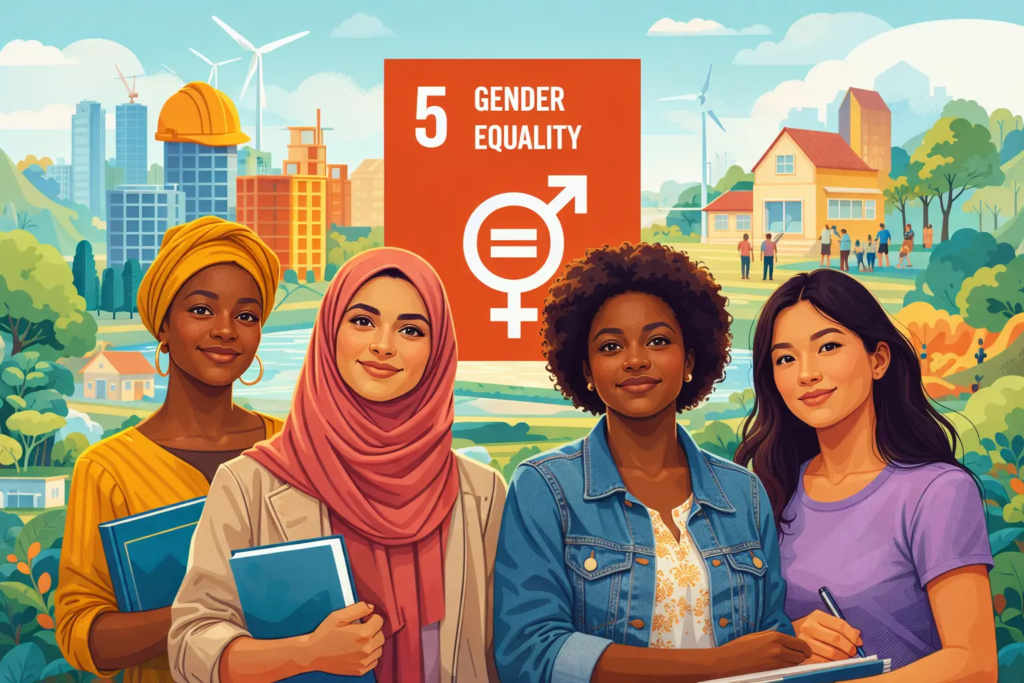
Violence looks different across cultures and classes
Violence does not look the same everywhere. The WHO study and other research show that in some societies, controlling behaviours, emotional abuse and economic deprivation are normalised, while in others, dowry-related violence, so‑called honour crimes or forced sex within marriage are more visible (García‑Moreno et al., 2005; Corboz et al., 2024). Feminist political economy analyses from low-income and conflict-affected settings show that violence is also carried out by soldiers, police, peacekeepers and armed groups, and is tightly linked to militarised economies and displacement (True, 2012).
Wealth and class change where and how violence happens rather than whether it happens. Poor women, migrant workers and women in informal or precarious jobs face greater exposure to public space violence, workplace exploitation and police harassment (True, 2012). Women with more economic resources may avoid some forms of physical violence but often face psychological control, financial coercion, institutional silencing and digital abuse that are harder to detect and prove (Corboz et al., 2024). Across all groups, gender norms that condone men’s control and women’s subordination are among the strongest predictors of violence (Our Watch, 2024).
Violence leaves deep and intergenerational scars
Gender based violence reshapes survivors’ lives in long‑lasting ways. Many women live with fear, shame and self‑blame that erode confidence and hope, even when the violence has stopped (UNDP, 2018). Trauma can make it difficult to trust others, to form and sustain healthy relationships, or to leave unsafe ones because leaving feels more frightening than staying (UN Women, 2023). It can also make it hard to concentrate, sleep or manage daily tasks, reducing the likelihood of staying in school, completing training or working full‑time (UNDP, 2018). Survivors often live with chronic pain, injuries and reproductive health problems that stretch already fragile health systems (García‑Moreno et al., 2005). Many experience depression, anxiety and post‑traumatic stress that do not simply heal with time, and often go untreated because services are scarce or unsafe (UNDP, 2018).
These harms reverberate across generations. Children who witness or experience violence are more likely to develop behavioural and emotional difficulties, to drop out of school and to experience or use violence in their own intimate relationships later in life (UNDP, 2018; UN Women, 2023). They carry this trauma into adulthood, affecting their ability to learn, to form healthy relationships and to parent the next generation (UNDP, 2018; UN Women, 2023). Families dealing with the aftermath of violence often face economic hardship as survivors struggle to work consistently, pay health costs or maintain housing and food security (UNDP, 2018). Communities carry collective trauma that undermines social cohesion and trust, making it harder to organise for change.
These layered harms show that gender based violence is a core economic development issue – as fundamental to building societies as investing in roads and bridges (UNDP, 2018).

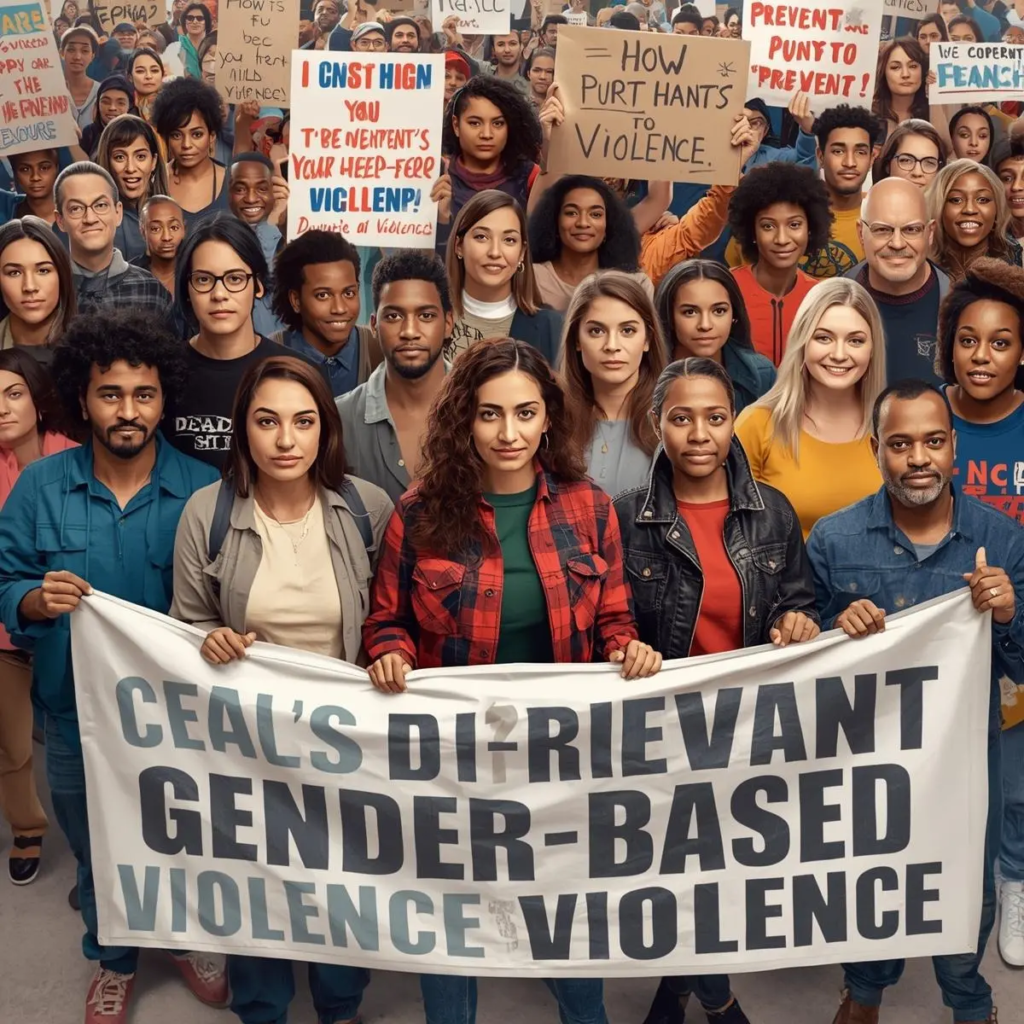
We know violence is preventable
Violence can be prevented when we fund approaches that tackle its root causes rather than only responding after harm is done. The UK’s What Works to Prevent Violence against Women and Girls Global Programme is one of the strongest examples, demonstrating that well‑designed interventions can reduce violence within a few years (Kerr‑Wilson et al., 2021). In the Democratic Republic of Congo, a UK aid‑funded project trained faith leaders and community activists to challenge the social acceptance of domestic violence, and reported domestic violence against women fell from 69 per cent to 29 per cent in two years (UK FCDO, 2019). Across multiple countries, What Works found that combining economic strengthening, gender norm change and community mobilisation can reduce violence and shift attitudes (Kerr‑Wilson et al., 2021).
The Sexual Violence Research Initiative (SVRI) offers another model for how to build evidence and power in the places most affected. Through grant‑making supported by donors such as Sida and the World Bank, SVRI has funded projects across Africa, Asia and Latin America (SVRI, 2021a; SVRI, 2021b). These include research on violence against women with disabilities in Uganda, dating violence prevention with adolescents in Mexico, and evaluations of community‑based interventions in Cambodia and South Africa (SVRI, 2021a; SVRI, 2021b). Such work not only builds evidence; it also strengthens research capacity in the global South and centres survivors and frontline practitioners in knowledge production (Corboz et al., 2024; SVRI, 2021a).
Why funding is still so scarce
Despite these profound costs and proven solutions, donors still do not fund violence prevention as if it were central to development. Only 0.2 per cent of total official development assistance is spent on reducing gender based violence, with about 0.05 per cent of aid spent on research on what works to end violence against women in low and middle‑income countries (SVRI, 2022; UN Women, 2025a). Governments and multilaterals invest billions in roads, energy and border security, while very little is invested in transforming the everyday conditions that enable violence (UN Women, 2025a).
Part of the answer is politics. Ending violence against women requires confronting male privilege in households, markets, religious institutions, security forces and the state (True, 2012). Many decision makers find this uncomfortable, and it can trigger backlash from powerful groups. As a result, violence is often treated as a side issue or a niche women’s concern, rather than a core question of governance, economics and human rights (UN Women, 2023).
Donor incentives also work against long‑term prevention. Big infrastructure projects or quick technical fixes produce visible results within electoral or funding cycles, while norm change, survivor‑led organising and institutional transformation take longer and are harder to measure (UN Women, 2023; SVRI, 2022). Funding systems favour large international NGOs and firms over women’s rights organisations and feminist movements in the global South, and only a small share of aid focused on violence reaches local civil society (UN Women, 2025a). Even when governments talk about evidence‑based programming, SVRI’s analysis shows that dedicated budgets for violence research are rare (SVRI, 2022).


A call to action
Right now, one in three women’s rights and anti‑violence organisations report having had to cut back or close programmes due to funding shortages, even as demand for services and prevention is rising amid conflict, climate shocks and cost‑of‑living crises (UN, 2025). This is not just a funding gap; it is a political choice. When less than 1 per cent of aid is spent on ending gender based violence, donors are accepting a world where women and gender diverse people are expected to live with violence (UN Women, 2025a). Moreover, taking away violence prevention support after it has begun leaves many survivors at risk.
This choice is becoming even more dangerous as anti‑rights and anti gender movements gain power across many regions. These movements work to roll back sexual and reproductive rights, weaken protections against discrimination and close civic space for feminist organising, and evidence shows that where women’s rights are restricted, levels of violence rise rather than fall (UN Women, 2023). When states and donors give in to anti gender narratives, they not only undermine progress on SDG 5, they also create conditions in which violence becomes more acceptable, more hidden and harder to challenge (UN Women, 2023).
As a feminist research incubator, Includovate is working to shift this trajectory. We generate rigorous evidence on gender norms and the underlying causes of violence, led by researchers from the communities most affected. We partner with local organisations, governments and global allies to design and evaluate interventions that change harmful norms and strengthen systems. But organisations like ours and the movements we work alongside cannot do this with short‑term, project‑based funding (UN Women, 2023; SVRI, 2022).
If donors are serious about the SDGs, they must treat a life free from violence as non‑negotiable. That means long‑term, flexible funding for feminist movements, locally led research and prevention, not only emergency services and criminal justice responses (UN Women, 2025a). It also means building violence prevention into climate, health, education and economic programmes and recognising that preventing GBV is as fundamental to economic development as building roads and bridges, because without safety and healing, people cannot study, work, care or innovate to their full potential (UNDP, 2018).
At Includovate, we believe that ending gender based violence in our lifetimes is possible. The evidence exists and the expertise exists; what is missing is the political will and the resources to act at scale.
What you can do
Even without a big budget or job title, you can help shift the conditions that allow violence to continue:
- In your life: Believe survivors, listen without judgment and respect their decisions about what to do next. Call out sexist jokes and comments that normalise men’s control. Give what you can to local shelters and women’s rights organisations facing funding cuts (UN, 2025; UN Women, 2023).
- In your community: Ask your workplace, school or faith community what policies they have on harassment, gender equality and violence and push for better if they fall short. Support or help organise programmes that teach consent and challenge harmful gender norms, especially with young people (Kerr‑Wilson et al., 2021).
- In politics and aid: As a voter, taxpayer or development worker, ask your government or agency how much they invest in ending GBV, and press them to increase long‑term, flexible funding for feminist movements and locally led prevention (UN Women, 2025a). Treat a life free from violence as non‑negotiable and as central to development as roads and bridges.
References
- Corboz, J., Dartnall, E., Brown, C., Fulu, E., Gordon, S. and Tomlinson, M., 2024. Co‑creating a global shared research agenda on violence against women in low‑ and middle‑income countries. Health Research Policy and Systems, 22(1), p.71. Available at: https://doi.org/10.1186/s12961-024-01153-3.
- García‑Moreno, C., Jansen, H., Ellsberg, M., Heise, L. and Watts, C., 2005. WHO multi‑country study on women’s health and domestic violence against women: Initial results on prevalence, health outcomes and women’s responses. Geneva: World Health Organization. Available at: https://www.who.int/publications/i/item/924159358X.
- Kerr‑Wilson, A., Gibbs, A., McAslan Fraser, E., Ramsoomar, L., Parke, A., Khuwaja, H.M.A. and Jewkes, R., 2021. Reflections from the What Works to Prevent Violence against Women and Girls Global Programme. Frontiers in Global Women’s Health, 2, 788264. Available at: https://doi.org/10.3389/fgwh.2021.788264.
- Our Watch, 2024. The link between gender inequality and violence against women. Our Watch. Available at: https://www.ourwatch.org.au/link-between-gender-inequality-and-violence.
- SVRI, 2021a. SVRI grant‑making 2014–2019. Pretoria: Sexual Violence Research Initiative. Available at: https://www.svri.org/sites/default/files/attachments/2020-03-05/SVRI%20Grantmaking%202014-2019_v3.pdf.
- SVRI, 2021b. SVRI grantmaking in Asia. Pretoria: Sexual Violence Research Initiative. Available at: https://www.svri.org/sites/default/files/attachments/2021-10-28/SVRI%20Grantmaking%20in%20Asia_0.pdf.
- SVRI, 2022. Tracking funding for VAW research in low‑ and middle‑income countries. Pretoria: Sexual Violence Research Initiative. Available at: https://www.svri.org/tracking-funding-for-research-on-violence-against-women-in-low-and-middle-income-countries/.
- True, J., 2012. The political economy of violence against women. Oxford: Oxford University Press.
- UK FCDO, 2019. UK aid project helps cut violence against women by more than half in Democratic Republic of Congo. GOV.UK. Available at: https://www.gov.uk/government/news/uk-aid-project-helps-cut-violence-against-women-by-more-than-half-in-democratic-republic-of-congo.
- United Nations (UN), 2023. Goal 5: Achieve gender equality and empower all women and girls. United Nations Sustainable Development. Available at: https://www.un.org/sustainabledevelopment/gender-equality/.
- United Nations (UN), 2025. Aid cuts shutdown or suspend one in three women’s anti‑violence programs. UN News, 26 October. Available at: https://news.un.org/en/story/2025/10/1166186.
- UNDP, 2018. Violence against women, a cause and consequence of inequality. New York: United Nations Development Programme. Available at: https://hdr.undp.org/content/violence-against-women-cause-and-consequence-inequality.
- UN Women, 2023. At risk and underfunded: How funding cuts are threatening efforts to end violence against women. New York: UN Women. Available at: https://knowledge.unwomen.org/en/digital-library/publications/2025/10/at-risk-and-underfunded-how-funding-cuts-are-threatening-efforts-to-end-violence-against-women.
- UN Women, 2024. Less than 1 per cent of aid spending targets gender-based violence. UN Women. Available at: https://open.unwomen.org/en/story/less-1-cent-aid-spending-targets-gender-based-violence-according-new-reports.