
Dr. Kristie Drucza
Allies And Accomplices In International Development
International development feels different now. For many of us, the last few years have been bruising. The era of expansive US development funding is over, and nothing has neatly replaced it. Long‑promised commitments to localisation and decolonisation still jostle with shrinking budgets, securitised agendas and culture‑war backlash against gender, inclusion and rights. At the same time, the brutality of the assault on Palestine has exposed deep hypocrisy in how “universal” human rights are defended and whose lives are treated as expendable in the name of geopolitics.
In this context, many practitioners feel deeply demoralised. You might recognise it in yourself: the sense that statements and strategies are meaningless, that decisions are made far above your head, that the institutions you work in are more interested in reputation and funding than in justice. It is tempting to withdraw into private despair or professional self‑protection, to do your job competently, keep your head down and stop expecting more.
But this is exactly the moment when we cannot surrender to the most negative voices and demoralising energy around us. We may not control the big geopolitical decisions, but we do control how we show up. This is where the distinction between ally and accomplice becomes powerful. It does not exist to shame or divide us; it exists to help us see the next brave step from wherever we are standing.

When allyship matters in a broken system
In international development, many of us instinctively see ourselves as allies. We try to listen to partners and communities. We push back on colonial language in reports. We resist the most overtly racist, sexist, ableist or homophobic practices. We speak up in internal meetings when someone erases the experience of people in Gaza, Afghanistan, Iran, Sudan or elsewhere as “too political” or “too sensitive” to address.
This kind of allyship matters, especially now. Allies help keep values alive within institutions under pressure to conform, to be “neutral” and to prioritise donor comfort over community realities. By naming injustice, by insisting on dignity in communications and by centring local analysis in your research and program design, you resist the slow drift toward normalising dehumanisation. In a demoralised sector, simply refusing to look away is an act of moral stamina.
At the same time, allyship can remain relatively safe. You can attend every decolonising development webinar, quote Global South scholars and add “locally led” to your logframe without actually changing who holds power over money, narrative and risk. You can “raise concerns” about Palestine or other crises in internal spaces, but ultimately align yourself with decisions made far above you, because that is how careers are protected.
The ally–accomplice distinction is useful precisely because it makes this visible. It reminds us that while allyship is an honourable and necessary starting point, it is not the end of the journey.
What accompliceship looks like in international development
Accomplices do everything allies do, and then they spend their power (Jackson et al.). They accept that in a time of global unrest, the question is not whether development is political, but whether it is political in ways that reinforce domination or strengthen justice.
In practice, accompliceship in international development can look like this.
In your organisation, you refuse to be the compliant “technical expert” whose work sanitises political realities. You insist that your conflict analysis, safeguarding report, gender assessment or evaluation includes what people on the ground are actually saying, including when they name occupation, apartheid or state violence. You are willing to accept pushback from senior leaders or donors who feel safe with euphemisms.
In partnerships, you do more than talk about localisation. You negotiate budgets, governance structures and risk frameworks that put genuine control in the hands of organisations supporting those most affected by injustice, especially feminist, disability‑led, Indigenous and youth‑led groups. If local partners want to lead, you support their choice, even if it means you do more work behind the scenes and your logo is less visible.
In funding spaces, you use your access to question priorities that funnel resources toward the strategic interests of powerful states rather than the self‑defined needs of communities. You support calls for unrestricted, long‑term funding and for accountability to people and movements, not just to donor reporting cycles. You do this knowing you may be labelled “difficult” or “political”.
In public, you challenge the white-saviour narratives and pity‑based fundraising that still dominate much of development communication (Krause and Römhild, 2023). You refuse to participate in campaigns or media pieces that strip people of agency or selectively humanise some victims while erasing others. You risk being sidelined on high‑profile initiatives in order to protect the dignity of those you claim to stand with.
You do not only criticise behind closed doors; you give clear, direct feedback and give your organisation or boss a real chance to respond. When they do respond, you pay attention to whether change follows and you act accordingly.
None of this is comfortable. That is the point. Accompliceship is about transforming moral outrage into choices that redistribute power, not just feelings. It asks you to spend your professional and social capital on unpopular truths, not hoard it for safety.
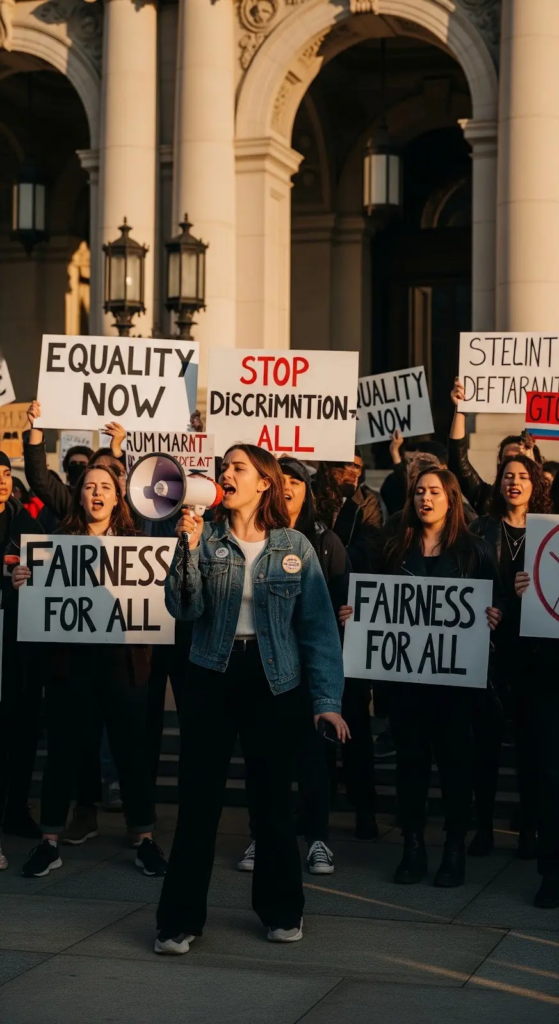
From safe solidarity to courageous action
In a sector as battered as ours, calls to “stay hopeful” can sound hollow. Hope does not mean pretending that what is happening in Palestine, or in shrinking civic spaces around the world, is acceptable or temporary. It does not mean denying how exhausted and betrayed many practitioners feel.

Instead, hope in this moment looks like a deliberate stance: refusing to let cynicism become an excuse for complicity. It is the quiet, stubborn commitment to keep acting as if justice is possible, precisely because the alternative, giving up, guarantees that injustice wins.
Within that stance, ally and accomplice become two necessary roles. Allies keep the ethical conversation alive when institutions would rather move on. Accomplices convert that conversation into risky, structural action. Both are needed in a landscape where rights are under attack, and the old certainties of aid have crumbled. The distinction between them is not a purity test; it is a compass that helps each of us orient ourselves in a storm.
If you feel more like an ally right now, start there with integrity. Keep listening to colleagues and partners who are more directly affected by oppression and believe them when they describe how policies, funding decisions or public silences play out in their lives. Use your role to challenge dehumanising language, to push for intersectional analysis and to invite community‑defined measures of “success” into your work. This is not small. It is how trust and political clarity are built.
Then, ask yourself one hard question: Where am I playing it safe out of fear, and what is one concrete risk I am willing to take? Maybe it is speaking up in a donor meeting about Palestine, or questioning funding from a mining company, knowing it may make things awkward. Maybe it is organising with colleagues to demand that your organisation take a public stand, even if that challenges government partners.
If you already see yourself as an accomplice, the work is to keep going without burning out or romanticising your own role. Build accountability with peers and with the communities you claim to serve, so that your risks are strategic and collective rather than impulsive or self‑centred. Share resources, share platforms and share decision‑making, so that you are not the hero of the story but one of many people redistributing power.
The international development system, as we knew it, is faltering. That is frightening, but it also means there is more space than ever to imagine and enact something different. We do not get to choose the era we live and work in. We do get to choose whether we numb ourselves or use whatever privilege and positional power we have as allies and accomplices to insist on a more honest, locally led, and liberatory future.
In the face of global unrest and open brutality, our task is not to feel optimistic. It is to keep acting, together, as if another world is possible, and to be willing to risk something real to bring it closer. If we can do that without turning on each other, and instead hold each other with rigorous solidarity and care, we have a far better chance of getting there.

References
- Indigenous Action Media (2014) Accomplices not allies: Abolishing the ally industrial complex. Available at: https://www.indigenousaction.org/accomplices-not-allies-abolishing-the-ally-industrial-complex/
- Jackson, R.G., Huskins, K., Skelton, S.M. and Thorius, K.A.K. (2020) Ally & accomplice: Two sides of the same coin. Equity Dispatch, Midwest & Plains Equity Assistance Center. Available at: https://files.eric.ed.gov/fulltext/ED623053.pdf
- Krause, S. and Römhild, R. (eds) (2023) White saviorism in international development: Theories, practices and lived experiences. From Poverty to Power/From Poverty Knowledge Hub. Available at: https://frompoverty.oxfam.org.uk/white-saviorism-in-international-development-theories-practices-and-lived-experiences/