
Dr.Kristie Drucza, Dr.Mohsin Hafeez, Dr.Almah Tararia, Kanwal Waqar, Monal Bhattarai
An enumerator arrives in a village at noon, clipboard in hand. He knocks, asks for the head of household, and a man steps forward. Twenty minutes later the survey is complete, the box is ticked, and the data is “disaggregated by sex.” But the woman who walked two kilometres for water that morning was never asked. The daughter who missed school to carry it was never counted. The neighbour who cannot see the questionnaire was never approached. That survey is not broken. By its own standards, it is a success — and that is exactly the problem.
This blog draws on Includovate’s webinar “Counting What Matters: Inclusive Data Collection in Water Resource Management,” with panellists from IWMI, Canopy Nepal, and Sustineo PNG. A recording of the webinar is available here.
Water programmes almost always say they care about gender equality and social inclusion. Far fewer of them can say their data actually captures it. That gap, between the strategy documents and the survey instruments that follow them, was the starting point for our recent webinar, which brought together practitioners from Pakistan, Nepal, and Papua New Guinea to ask a deceptively simple question: what does it actually take to make water data inclusive, not just disaggregated?
Dr Mohsin Hafeez, Global Director, Water Food Ecosystems, IWMI, framed inclusive data as central to IWMI’s mission rather than a peripheral concern. His argument was direct: the world’s water, food, and ecosystem challenges cannot be solved with evidence that overlooks half the people who use, manage, and depend on these resources. If research-for-development is to change policy and investment, the data underneath it has to be seen by everyone, which makes inclusion a question of scientific credibility, not only of equity. He set the tone for the panel by positioning inclusive data as a shared responsibility across the water sector, connecting field-level survey design all the way up to national planning and donor decision-making.
WHAT IS INCLUSIVE DATA, AND WHY ISN'T DISAGGREGATION ENOUGH?
Inclusive data means ensuring that data are collected for all people, regardless of their location, ethnicity, gender, age, disability, or other characteristics (Office for National Statistics, 2023). It is the systematic collection, analysis, dissemination, and use of information that ensures all people are visible and counted, and is explicitly oriented toward those who are historically marginalised, with the ultimate purpose of eliminating the data gaps that perpetuate invisibility in policy and decision-making (Inclusive Data Charter; Equality Insights, 2025).
Critically, inclusive data goes beyond simple disaggregation. It spans the entire data value chain, from how questions are designed and who participates in collection, through to how findings are analysed, disseminated, and actioned (International Institute for Global Health, 2025). This distinction was the organising idea of the webinar’s scene-setting presentation: sex-disaggregated data tells you who was counted, but gender-inclusive evidence tells you whose knowledge shaped the tool, whose experiences are legible in the indicators, and whose answers drove the recommendations.
Dr Kristie Drucza, CEO, Includovate, drew the distinction that organised the entire webinar: sex-disaggregated data tells you who was counted, but inclusive data tells you whose knowledge shaped the questions, whose experiences are legible in the indicators, and whose answers drove the recommendations. She located inclusion across the full data value chain from question design and who participates in collection, through to how findings are analysed, disseminated, and acted upon and used the “household as unit” problem to show how a single design choice can render women’s water roles invisible no matter how carefully the data is later disaggregated. Her central caution: presence in a consultation is not the same as participation.
GENDER DATA: BEYOND THE HOUSEHOLD HEAD
Gender data encompasses all data disaggregated by sex or gender, including data that reflect gender issues, roles, relations, and inequalities, and collection methods must account for stereotypes and social norms that introduce bias (IIED, 2025). UN Women’s flagship monitoring report found that women and girls who experience multiple, intersecting forms of discrimination fare worse than all other groups across key SDG dimensions, which is precisely why sex-disaggregated data alone is inadequate (UN Women, 2018).
Kanwal Waqar, Deputy Country Representative at IWMI, works on Water User Associations in Pakistan, India, and Nepal and illustrates the point sharply. Quotas increase women’s formal membership in these associations, but authority remains concentrated among upper-caste men. Representation on a committee list is not the same as decision-making power over cropping or water allocation, and a data system that only counts membership will miss that entirely. The panel also pointed to a stark evidence gap behind these numbers: in Pakistan, 68% of women work in agriculture, yet hold only 3% of agricultural decision-making positions, and just 9% of men acknowledge that women can experience water shortages. Numbers like these change who you send to collect data, and how.
DISABILITY DATA: THE WASHINGTON GROUP QUESTIONS AND THEIR LIMITS
Article 31 of the Convention on the Rights of Persons with Disabilities (CRPD) was the first time international human rights law directly embedded a requirement for statistics and data collection in a treaty (National Disability Authority Ireland). States Parties must collect data disaggregated by sex, age, and type of disability (UN DESA, 2016). The Washington Group Short Set of Questions is the internationally recognised instrument for this purpose, covering six functional domains (seeing, hearing, walking, cognition, self-care, and communication) and enabling intersectional disaggregation, for example, by disability and gender simultaneously (UNFPA Asia-Pacific).
Screening for disability is a first step; what a programme does with that information in its analysis, its facilitation choices, and its resource allocation is what determines whether the data becomes inclusive practice or a box that got ticked. (National Disability Authority Ireland).
HEARING, NOT JUST COUNTING: YOUTH AND INDIGENOUS VOICES
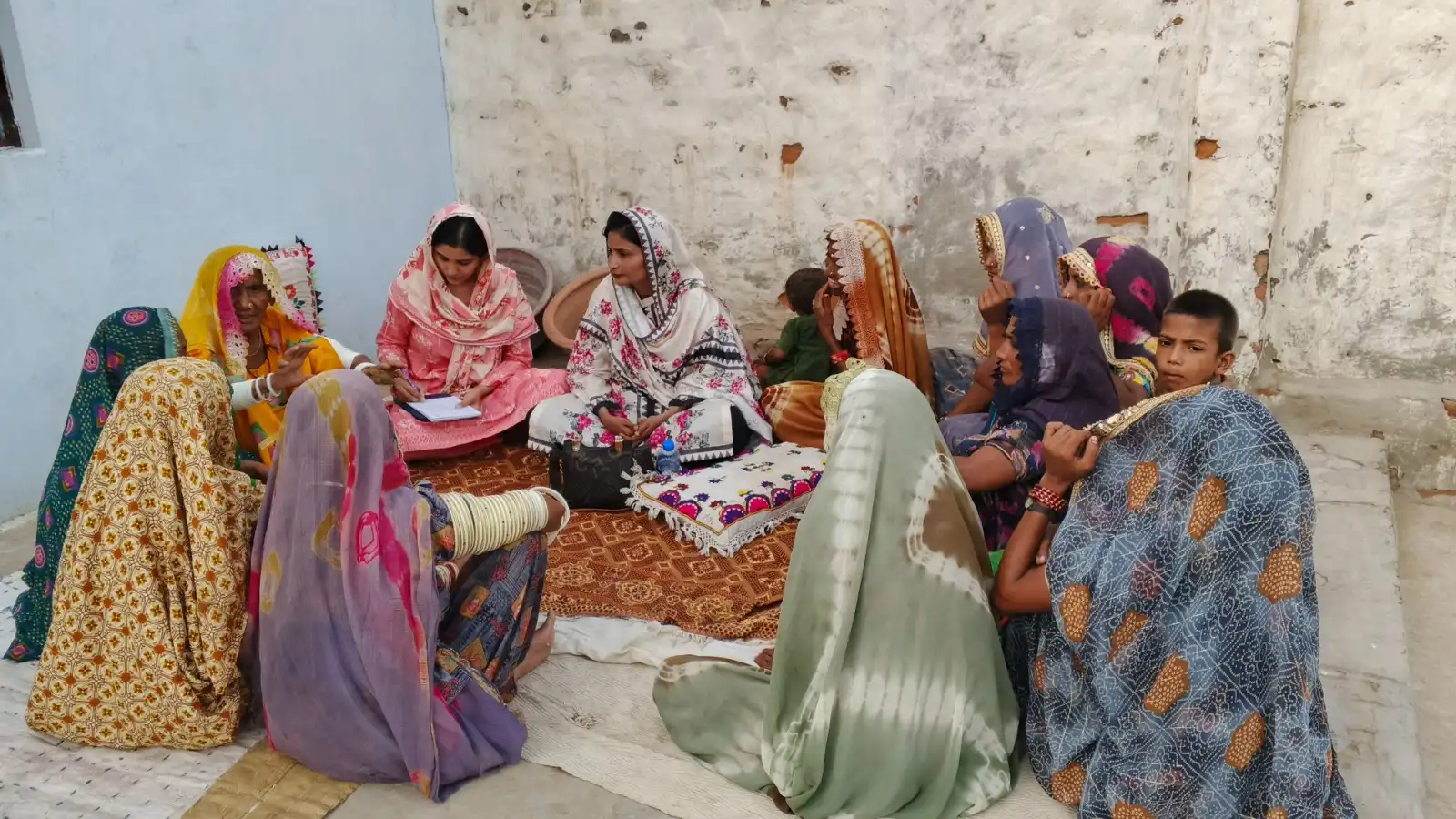
Quantitative data reveals the scale of inequality; qualitative data reveals the lived experience and structural causes behind it. Sally Merry (2016) argues that indicators are most successful when paired with context-rich qualitative accounts, and that quantification alone risks stripping away the detail essential to understanding social injustice. That argument came to life in the panel discussion by Monal Bhattarai, Director of Canopy Nepal, which creates space for children and young people to share experiences they cannot articulate in formal survey settings. Structured surveys are good at counting; they are not designed to let a child explain, in their own words, what changed for them. Community fackilitation can hold that space in a way a questionnaire cannot.
This connects to a distinction practitioners are increasingly urged to make: the difference between “giving voice” to young people, which still implies non-youth actors are granting participation, and centring youth voices, which breaks down the structural barriers that exclude young people from data and research processes in the first place (Research to Action, 2024).
For Indigenous and customary communities, the questions run deeper still. Dr Almah Tararia’s reflections on Papua New Guinea underscored that inclusive engagement depends not only on who is invited to participate, but on who asks the questions, in what language, through what relationships, and under whose authority. Concepts as abstract as climate risk or carbon markets cannot simply be translated word-for-word into local frameworks; they need to be reconstructed in locally meaningful terms if the resulting data is to be credible at all. This is consistent with the principle of Indigenous Data Sovereignty, the right of Indigenous peoples to govern the collection, management, interpretation, and reuse of data related to them (Community First Development), and with the CARE Principles (Collective Benefit, Authority to Control, Responsibility, Ethics), which were developed specifically to address the power differentials that purely technical data standards leave unaddressed (Carroll et al., 2020; ARDC, 2022).
INTERSECTIONALITY IS AN ANALYSIS OF POWER, NOT A CHECKLIST
Kimberlé Crenshaw’s concept of intersectionality describes how a person’s sex, age, ethnicity, and other social identities combine to create unique experiences of advantage and disadvantage that are not visible when each identity is analysed alone (Crenshaw, 1989; UN Women Australia, 2022). Crucially, intersectionality is not merely a checklist of identity characteristics; it is a way of thinking that requires an analysis of power (UN Women Australia, 2022; ACFID, 2022).
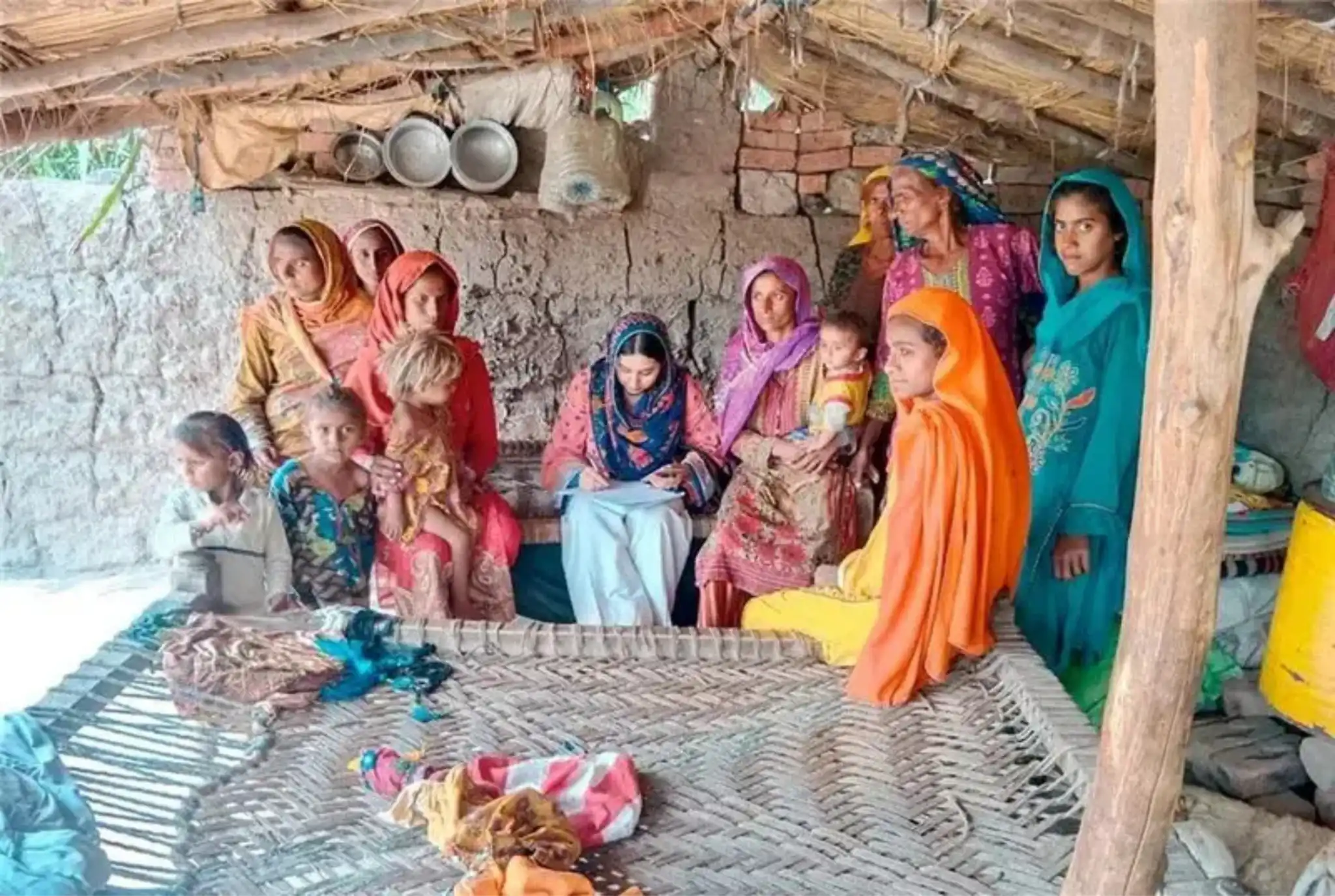
In water programming specifically, most household-level poverty and access data conceal exactly this kind of internal variation. Differences in access and decision-making power between women, older people, children, and people with disabilities living in the same household remain invisible unless data is collected at the individual level and designed to be gender-sensitive and multidimensional from the outset (ACFID, 2022). The panellists’ scenarios, from irrigation baselines that miss women’s cropping decisions to monitoring frameworks that track infrastructure well but miss shifts in safety or voice, are all versions of the same underlying failure: disaggregation without an intersectional analytical lens still leaves the most compounded forms of exclusion unseen.
GOOD ENOUGH" INCLUSIVE DATA: WHAT PANELLISTS SAID IS ACTUALLY ACHIEVABLE
The panel was pressed on a fair question: what is the minimum a programme with limited time and budget can do to meaningfully improve the inclusiveness of its evidence? The discussion converged on a small set of adaptations that do not require unlimited resources:
- Plan and budget for translation and language differences from the design stage, rather than treating them as a field logistics problem.
- Run separate sessions for women and other marginalised groups rather than relying on mixed-group facilitation and assuming everyone present had an equal chance to speak.
- Use the Washington Group Short Set for disability screening, paired with a clear plan for how the resulting data will be used.
- Renegotiate who counts as a “water user” in the sampling frame, rather than defaulting to formal committee members or household heads.
- Build in safeguarding training and supervision for local enumerators and partners, who often share the same social norms that produce exclusion in the communities where they work.
None of these requires a bigger budget than most water programmes already have. What they require is treating inclusion as a research quality issue, not just an equity add-on.
THE CORE MESSAGE
Sex-disaggregated data is necessary but not sufficient. Counting who was in the room does not tell you whose knowledge shaped the questions, whose experiences made the tool legible, or whose answers drove the recommendations. Methodological choices are never neutral: interviewing only household heads, scheduling focus groups at midday, or using dominant-language instruments in multilingual communities all produce systematically skewed evidence, whether or not anyone intended that outcome. Naming this is what separates methodological critique from advocacy, and it is the starting point for any programme that wants its water data (and its development data more broadly) to actually reflect the people it is meant to serve.
References
- Australian Council for International Development (ACFID) 2022, Strengthening Australia’s efforts to address gender equality: election policy brief, ACFID. https://acfid.asn.au/acfid_resource/election-policy-brief-2022-gender-equality/
- Australian Research Data Commons (ARDC) 2022, CARE Principles for Indigenous Data Governance, ARDC. https://ardc.edu.au/resource/the-care-principles/
- CBM Global Disability Inclusion 2023, Inclusive Data Charter action plan. https://cbm-global.org/news/inclusive-data-charter-action-plan
- Carroll, SR, Garba, I, Figueroa-Rodriguez, OL, et al. 2020, ‘The CARE Principles for Indigenous Data Governance’, Data Science Journal, vol. 19, no. 1, p. 43. https://doi.org/10.5334/dsj-2020-043
- Community First Development n.d., Indigenous data sovereignty. https://www.communityfirstdevelopment.org.au/indigenousdatasovereignty
- Crenshaw, K 1989, ‘Demarginalizing the intersection of race and sex’, University of Chicago Legal Forum, vol. 1989, pp. 139-167. https://chicagounbound.uchicago.edu/uclf/vol1989/iss1/8/
- Data2X n.d., Adopting the Inclusive Data Charter. https://data2x.org/solution/adopting-the-inclusive-data-charter
- Data for Sustainable Development Goals (Data4SDGs) 2024, Inclusive Data Charter. https://www.data4sdgs.org/initiatives/inclusive-data-charter
- Equality Insights 2025, Accelerating inclusive data: tools to leave no one behind. https://equalityinsights.org/accelerating-inclusive-data/
- IMPACT Initiatives 2021, Committing to more inclusivity in humanitarian responses. https://www.impact-initiatives.org/stories/committing-to-more-inclusivity-in-humanitarian-responses-impacts-engagement-with-the-inclusive-data-charter-idc
- International Institute for Environment and Development (IIED) 2025, Bridging the gender data gap: challenges and opportunities. https://www.iied.org/bridging-gender-data-gap-challenges-opportunities
- Merry, SE 2016, The Seductions of Quantification: Measuring Human Rights, Gender Violence, and Sex Trafficking, University of Chicago Press, Chicago.
- National Disability Authority (Ireland) n.d., Overview of UNCRPD Article 31: statistics and data collection. https://nda.ie/uploads/publications/overview-of-uncrpd-article-31-statistics-and-data-collection.docx
- Office for National Statistics (ONS) 2023, Inclusive Data Charter action plan for the global Sustainable Development Goals. https://www.ons.gov.uk/economy/environmentalaccounts/methodologies/inclusivedatacharteractionplanfortheglobalsustainabledevelopm
- Research to Action 2024, ‘Nothing about us without us’: youth inclusion in research. https://www.researchtoaction.org/2024/08/nothing-about-us-without-us-youth-inclusion-in-research/
- Sightsavers 2023, Sightsavers Inclusive Data Charter action plan 2024-2027. https://www.sightsavers.org/wp-content/uploads/2023/11/Sightsavers-inclusive-data-charter-action-plan-2024-2027.pdf
- UN Department of Economic and Social Affairs (UN DESA) 2016, Article 31: statistics and data collection. https://www.un.org/development/desa/disabilities/convention-on-the-rights-of-persons-with-disabilities/article-31-statistics-and-data-collection.html
- UN Economic Commission for Africa (UNECA) 2018, Inclusive Data Charter: vision and principles. https://archive.uneca.org/sites/default/files/uploaded-documents/ACS/StatCom-Africa-VI/3_inclusive_data_charter_-_vision_and_principles_final.pdf
- UN Economic and Social Commission for Asia and the Pacific (UNESCAP) 2021, The Inclusive Data Charter, Stats Cafe presentation. https://www.unescap.org/sites/default/d8files/event-documents/The_Inclusive_Data_Charter_Global_Partnership_for_SDGs_Stats_Cafe_13Jan21.pdf
- UNFPA Asia-Pacific n.d., The Washington Group Questions on Disability. https://asiapacific.unfpa.org/sites/default/files/pub-pdf/wgq.v4.2.pdf
- UN Women 2018, Turning Promises into Action: Gender Equality in the 2030 Agenda for Sustainable Development, UN Women, New York.
- UN Women Australia 2022, Intersectionality explained. https://unwomen.org.au/our-work/focus-area/intersectionality-explained/