
Dr Kristie Drucza
Seven years into Includovate, and this does not feel like a moment for a glossy celebration. I feel proud of our team and our work, and at the same time, I see how stubborn some forms of exclusion are. We began Includovate with a clear belief: development is more honest and more effective when it starts with people who are usually pushed to the margins. We wanted to decolonise research for development by being genuinely inclusive in who asks questions, who interprets data and who speaks about the findings. It turns out that it is really hard to do in the current system.
Refusing “Business as Usual”
Before Includovate, I worked on programs where headline indicators on women’s participation looked impressive, yet did not tell us which women were actually benefiting. In one project, deeper analysis showed that female-headed households were reached, but spouses in male-headed households saw no benefit at all. The nuance was ignored. The assumption of a benevolent patriarch still shaped how impact was understood.
In another context, indigenous identities disappeared from a second round of panel data because the questions were considered a waste of space in a long survey. That decision removed our ability to see whether indigenous people were benefiting. At the same time, disability inclusion was often sidelined because it was seen as offering a lower return on investment than focusing on people who were able-bodied. These were not isolated incidents. They were signs of a deeper tolerance for exclusion. Includovate was born as a refusal to accept that as normal.
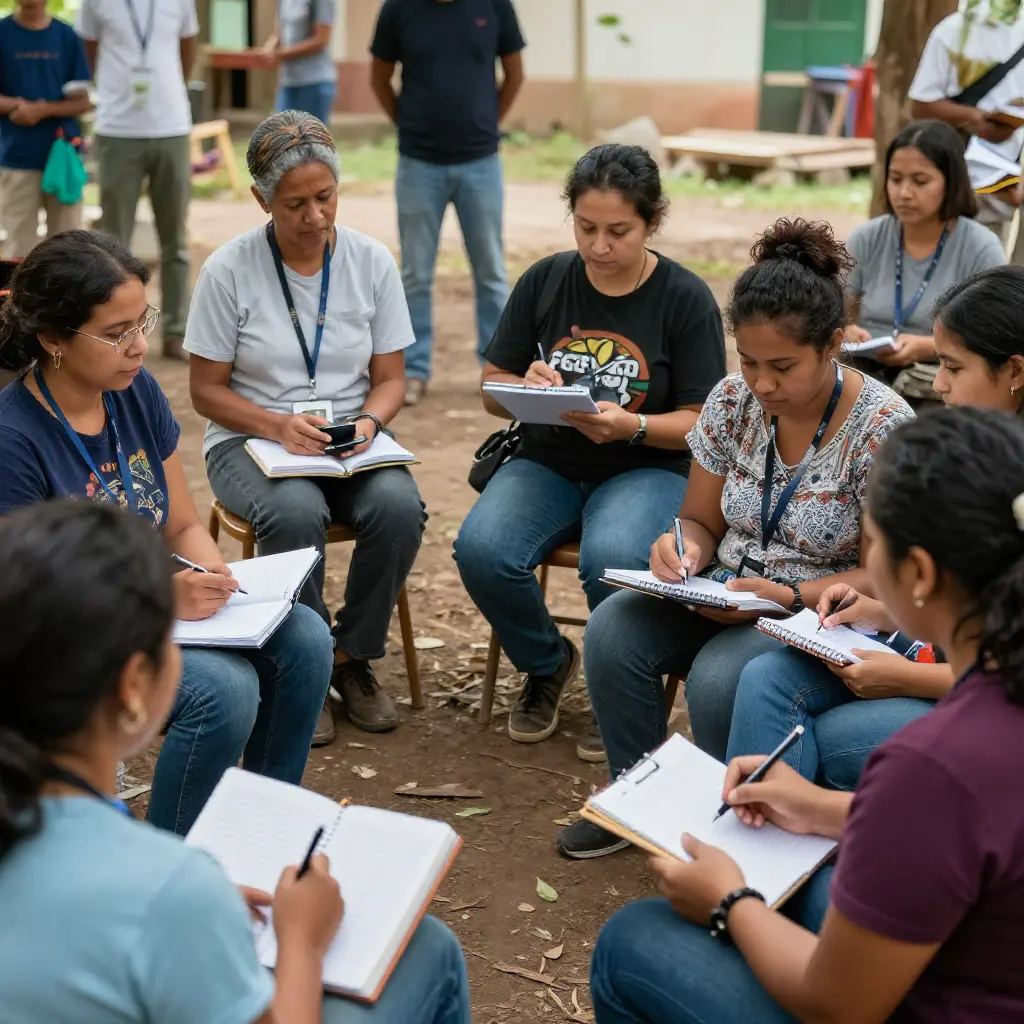
We created Includovate to bring together rigorous research, lived experience and practical action in ways that reflect how exclusion really operates. That meant questioning not only what data we collected, but who asked the questions, who interpreted the answers and who got to speak about the findings.
We also wanted to build pathways for research talent that was underused or excluded. Across low and middle-income countries, I met researchers who drove taxis or photocopied for professors, waiting for opportunities that never came. Others were confined to working only in their own country, despite wanting to contribute to global debates. Many had little or no say over how data about their own societies was collected, analysed or communicated. Too often, they were handed a survey and told to collect data, with no role in analysis or authorship. The knowledge was extracted but not shared. The expertise existed but went unrecognised.
Working at the Intersections
Seven years on, we have stayed committed to an intersectional approach, even when it would have been easier to focus on a single dimension. Some organisations focus on gender. Others focus on disability. Far fewer work meaningfully at the intersection of multiple forms of exclusion or invest in developing research talent among those with lived experience and deep contextual knowledge.
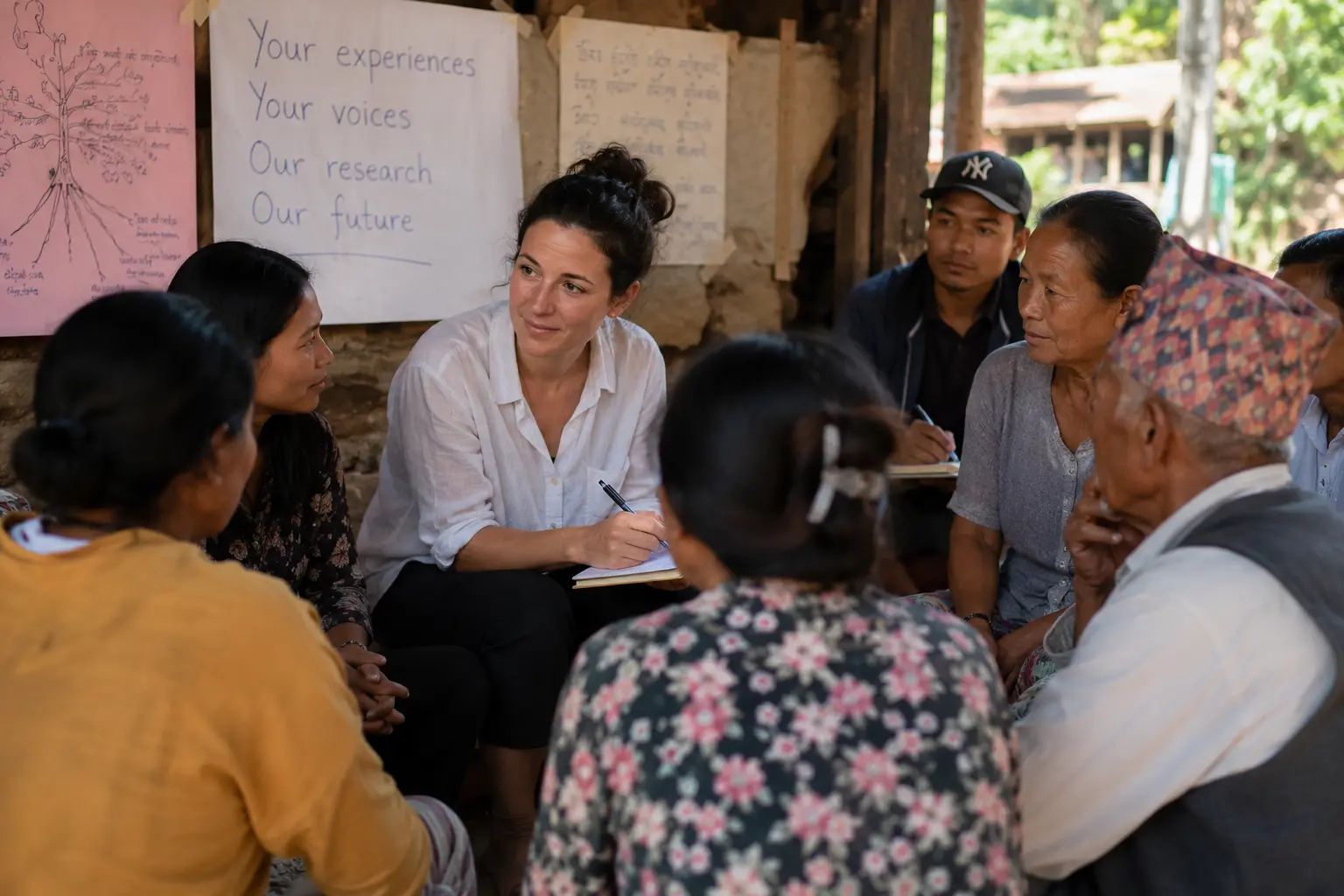
Our work with historically underrepresented identities has made it clear that trust cannot be assumed. Many communities we work with have experienced extractive research, short-term projects and broken promises. People are understandably cautious. Building genuine relationships takes time, consistency and humility. It means showing up, listening deeply and sometimes sitting with discomfort. Yet the dominant project model, with tight timelines and rigid deliverables, is not designed for this. Trust does not follow project schedules, and when we try to rush it, the integrity of the work suffers.
Inclusion is not a badge we earn once. It is an ongoing practice. We sometimes get it wrong. We make decisions that exclude people, even when we care deeply about not doing so. Sometimes we cannot survive and be inclusive in every direction at once. Inclusion has to be discussed, negotiated and revisited, and we learn how to do it largely through failure, which is uncomfortable but necessary.
Building a Mission Without a Safety Net
There is another side to this story that many do not see. Includovate has never had core funding. In the early years, we survived on my own savings and my decision not to pay myself so that we could build something that felt necessary. We have grown not because of financial security, but because of people: a remarkable team and collaborators who believe in this mission and keep showing up even when the path is uncertain. That collective commitment is the main reason we are still here.
We are a certified social enterprise that reinvests the majority of our profits into our mission. I have never been paid a dividend because everything has gone back into the work. We chose not to be an NGO because we wanted to be sustainable, nimble and innovative, without being tied to a single donor or funding stream. Yet we are still sometimes treated by NGOs and parts of the UN system as just another consulting firm, assumed to be driven by profit rather than purpose. Our proposals are often pared down to the bare bones, with little trust in our judgment about what good work costs. The structure that allows us to reinvest in our mission can make it harder for some to see our intentions.
Balancing sustainability with values, and growth with inclusion, is an ongoing challenge. We often face difficult decisions about when to accept work that keeps the doors open but stretches us, and when to say no and absorb the financial risk. There are no simple formulas for these choices.
Lessons From Seven Years
Despite the tension, some lessons have become non-negotiable. Inclusion cannot be an afterthought. It has to shape how we understand systems and design interventions from the outset, or it quickly becomes a superficial add-on. Intersectionality is not a box to tick in a proposal. It is essential if we want to avoid reinforcing the inequalities we say we are addressing.
Ethics also matters far more than many project timelines admit. Too many development projects skip robust ethical review, which is meant to protect respondents and strengthen methods, not slow things down. I still see large-scale surveys and qualitative studies proceed without any formal ethics process, even when they deal with sensitive topics and people on the sharp end of inequality. Treating ethics as optional undermines both people’s safety and the quality of the evidence we rely on.
Trust is foundational. Without trust, even the most technically sound interventions will fall short. Investing in people is central, not a side activity. Building research capacity and supporting the next generation, especially those with lived experience and local expertise, is core to any hope of long-term, meaningful change.
Frustration in a Shifting Landscape
As we mark seven years, I feel both proud and challenged. I am proud of the work we have done, the insights we have generated and the partnerships we have built, including with many of you reading this as alumni and collaborators. I am challenged because the development sector is under pressure, and an honest critique can feel risky as funding shrinks and politics shift. Doing this work with integrity requires constant questioning and accountability. It often involves ruffling feathers while trying to maintain relationships. Most days, it feels impossible to strike the right balance.
So do I feel victorious? No. I feel frustrated and at times, angry. I am frustrated that, after seven years, we are still sometimes misread as a typical consulting firm rather than a social enterprise driven by purpose. I am frustrated by the unequal power embedded in the systems we operate within, including funding models that can distort local labour markets in ways that are not equitable or sustainable. I worry that localisation, while necessary and long overdue, can sometimes be shaped by existing power dynamics that do not always uphold inclusion. I am disappointed that decisions driven by some of the richest men in the world have contributed to the hollowing out of USAID, throwing millions back into poverty and allowing the anti-rights movement to grow. Naming these tensions is uncomfortable, but necessary. Changing unequal systems requires more than good intentions. It demands persistence and a willingness to stay with the complexity.
The Personal Journey Behind the Work
Over time, I have learned that I need to be the best version of myself I can be to do this work well. That has meant taking my health seriously, seeking therapy and coaching, and acknowledging that I have limits (after several bouts of burnout). It has meant staying grounded in our values and mission, especially when the headwinds are strong. It has also meant keeping my ego in check, because if I do not, I risk becoming part of the very problems we are trying to challenge.
My commitment to this work is shaped by my own lived experience of exclusion and difference: growing up with an immigrant father and a lesbian mother, becoming a teenage parent, surviving sexual abuse and navigating undiagnosed dyslexia, dyscalculia and complex PTSD. These experiences shape how I see injustice and why I cannot ignore it. They are part of why I am drawn to work that wrestles with exclusion, power and voice, and why I find it difficult to walk away even when the work feels relentless.
An Unfair Marathon
This work is often invisible and rarely celebrated. I am frequently told that I should pause and recognise Includovate’s progress, to celebrate our survival and achievements as signs of tenacity and strong leadership. There is some truth in that. There is also a risk in framing survival in unfair conditions as uncomplicated success.
This is not a seven-year triumph. It is an unfair marathon. We do not know what will come next. We do know that challenges often arrive when the tank feels empty, and we are ready to give up. And yet we are here, through COVID-19, the war in Ukraine and the death of USAID.
We celebrate seven years not just because we are still here, but because we know we need to be even more thoughtful and strategic in pursuing our mission. Anniversaries matter not because they prove that everything is working, but because they mark moments when we stop, look honestly at where we are, and choose again to keep going.
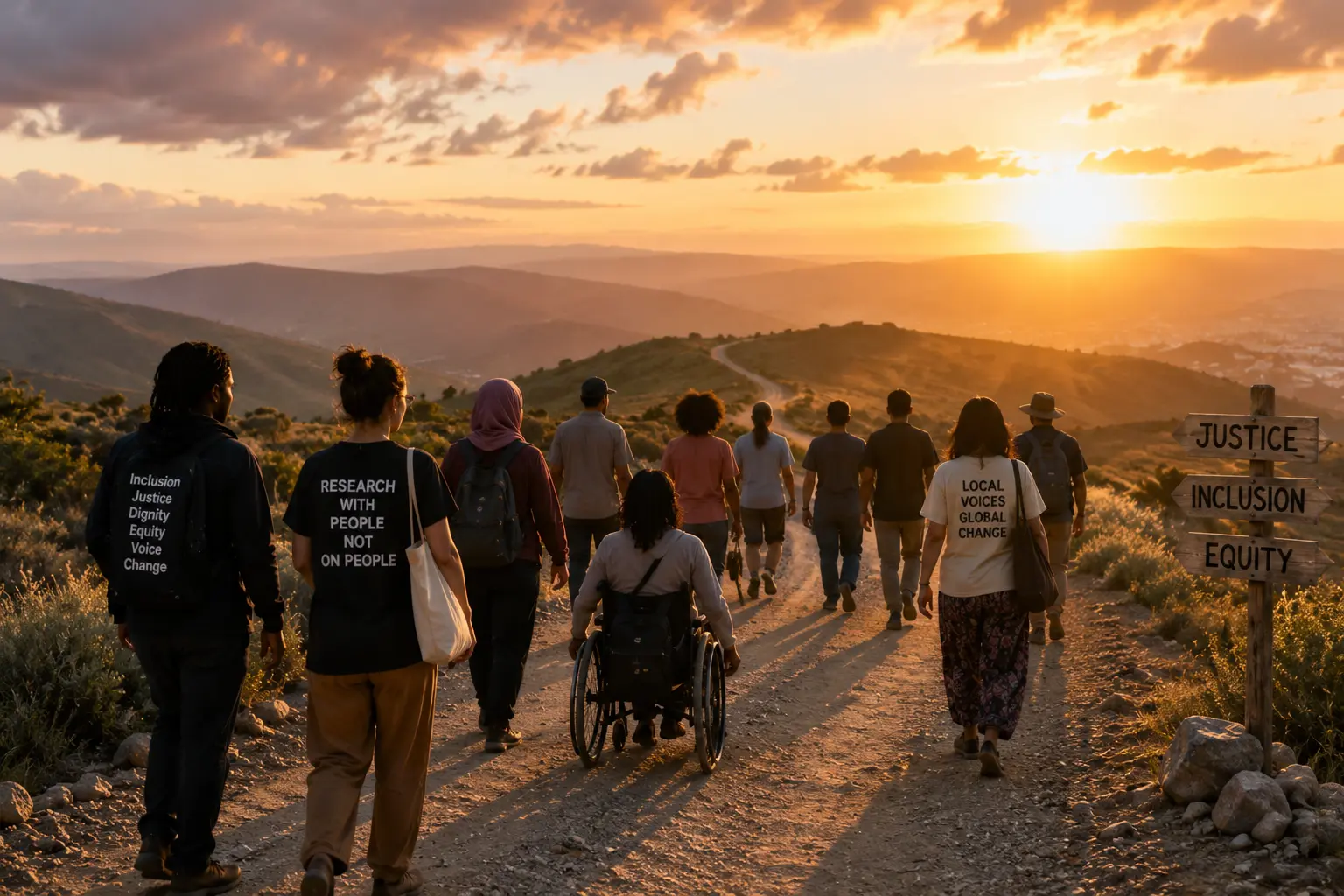
To everyone who has been part of Includovate’s story so far, especially our alumni and partners, thank you for running your part of this unfair marathon with us.