
Melissa Langworthy
Introduction
Why development research must move beyond GDP-think — and how solidarity economies are already showing the way
In 1944, the economist Karl Polanyi warned that a market economy unchecked by social purpose would ultimately devour the society that created it. Eight decades later, amid cascading climate disruption, rising inequality, geopolitical fragmentation, and the aftershocks of a global pandemic, his warning feels less like prophecy and more like a diagnosis.
The dominant response, from multilateral institutions and national governments alike, has been to seek growth. More of it, faster, greener if possible. Yet a quieter revolution is underway, one that starts from a different question entirely: growth for whom, governed how, and at what cost?
This is the animating question of the Social and Solidarity Economy (SSE) — an umbrella term for cooperatives, mutual associations, community enterprises, and purpose-driven organisations that embed democratic governance and social purpose into economic activity itself. It is a question that development research has, for too long, left on the margins.
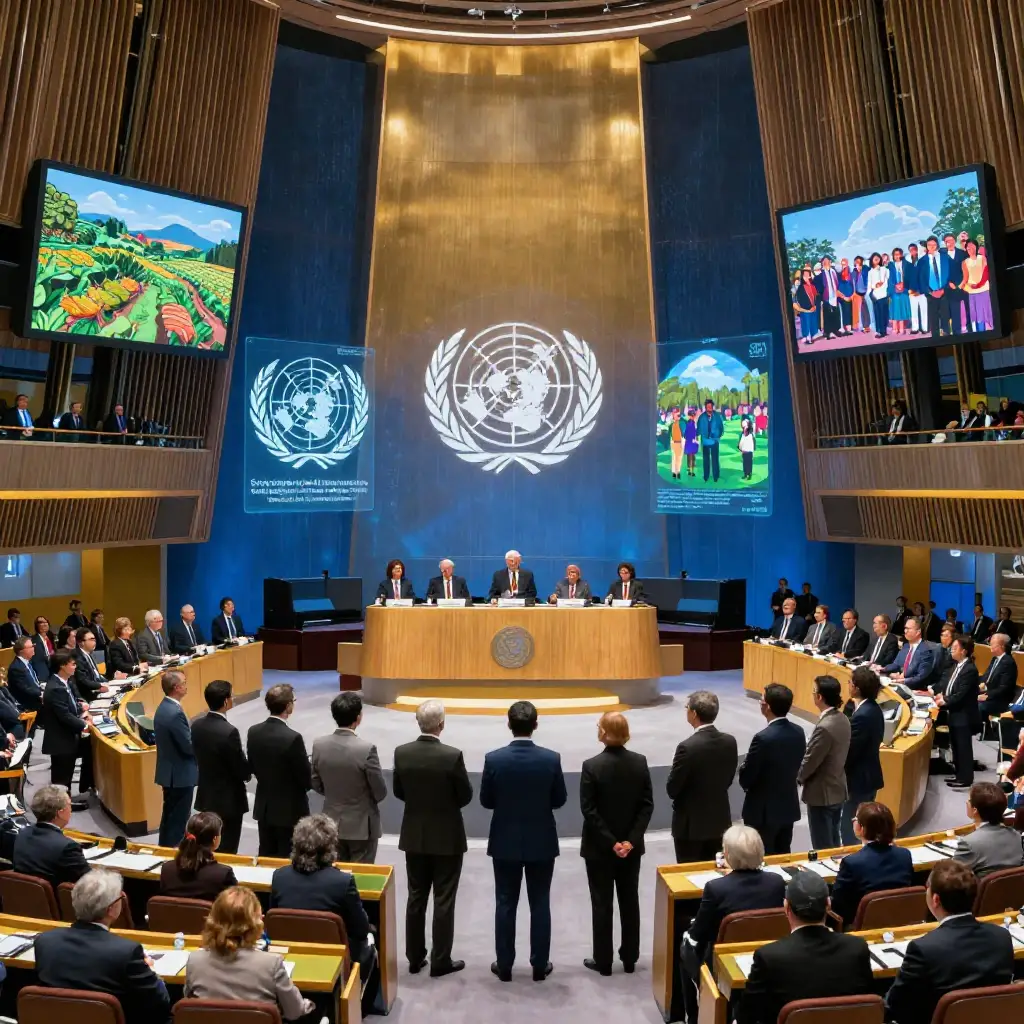
That is beginning to change. In November 2024, the UN General Assembly formally adopted a resolution recognising SSE as a critical vehicle for achieving all 17 Sustainable Development Goals. The African Union has committed to a 10-year SSE strategy. Grassroots movements from Medellín to Mondragon to rural Kenya are demonstrating at scale what solidarity-centred economics looks like in practice.
The evidence is accumulating. The question is whether development researchers (and the institutions that fund them) are ready to take it seriously.
What We Mean When We Talk About Solidarity
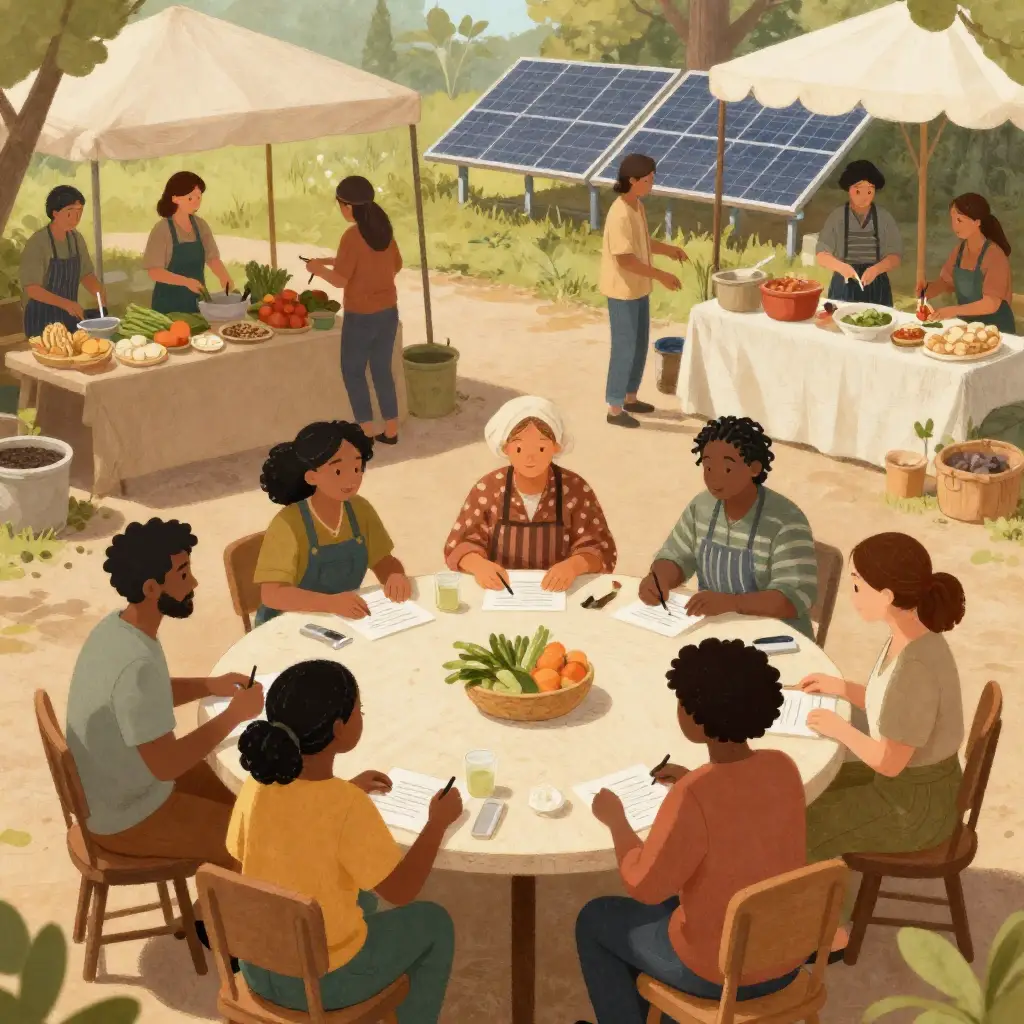
The solidarity economy is not a single model. It is a family of approaches unified by a set of shared principles: prioritising people over profit, embedding democratic governance, supporting community resilience, and maintaining ecological limits. Its vehicles include worker cooperatives, community land trusts, time banks, credit unions, social enterprises, and commons-based initiatives.
What distinguishes the SSE from conventional economic actors is not sentiment, it is structure. Unlike investor-owned firms, SSE organisations are designed so that those who do the work, or benefit from it, also govern it. Surpluses are reinvested in community purposes rather than extracted. And success is measured in terms that go beyond quarterly earnings.
SSE “encompasses enterprises, organizations and other entities that are engaged in economic, social and environmental activities to serve the collective and/or general interest, which are based on the principles of voluntary cooperation and mutual aid, democratic and/or participatory governance, autonomy and independence, and the primacy of people and social purpose over capital.”
— UN General Assembly Resolution on Promoting the Social and Solidarity Economy for Sustainable Development, November 2024
Rather than being a new idea, the International Labour Organization estimates that cooperatives alone employ or provide primary income for nearly 279 million people worldwide — close to 10% of the global workforce. In many countries, SSE organisations are significant actors in housing, healthcare, childcare, agriculture, and financial services. They are particularly important as employers of women and structurally marginalised communities who are systematically underserved by conventional labour markets.
WHAT THE EVIDENCE SHOWS: Three findings that should change how we think about development research
Development research has historically treated SSE as a niche concern: worthy of a footnote but rarely considered as a central element of analysis. But a growing body of evidence is making that position increasingly difficult to sustain. Here are three findings that deserve far wider attention.
1. Solidarity enterprises outperform on local economic multipliers
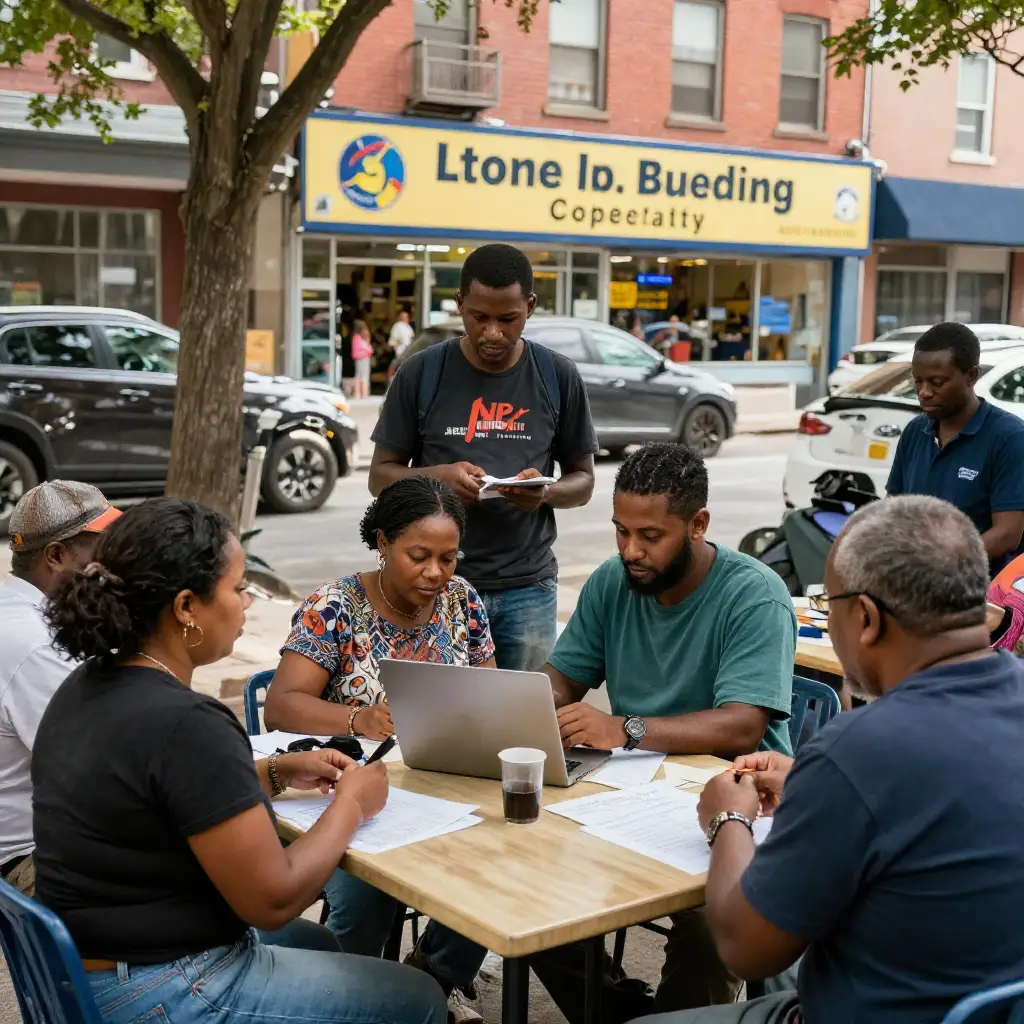
In a 2024 study applying input-output modelling to worker cooperatives in New York, researchers found a striking result: for every $1 in revenue, a worker cooperative recirculates approximately $1.42 back into the local economy, compared to just $0.80 from a comparable conventional firm. The mechanism is straightforward but consequential: because co-ops are worker-owned, wages are higher and more broadly distributed, meaning more income circulates locally rather than flowing to distant shareholders.
The implications extend well beyond New York. Conventional development economics has long assumed that attracting foreign direct investment is preferable to building local enterprise. The co-op multiplier evidence challenges that assumption directly. Local ownership is not just equitable; it may simply be more economically efficient.
CASE STUDY Mondragon Corporation, Basque Country, Spain
Founded in 1956 by a Catholic priest and five engineering graduates, Mondragon has grown into one of the world’s most analysed economic experiments. Today it comprises 81 cooperatives and employs approximately 70,000 people across its industrial and distribution networks, with revenues of approximately €11.2 billion in 2024. What sets Mondragon apart is not its scale alone, but its governance architecture: pay ratios between the highest- and lowest-paid workers are capped at 6:1 on average (compared to typical US corporate ratios of over 300:1, and 165:1 across FTSE 350 companies), and strategic decisions require democratic participation across the cooperative network. During the 2008 financial crisis, when Spain’s national unemployment rate reached 25%, unemployment in Alto Deba — Mondragon’s home county — fell to approximately 10%, less than half of the national average. This was achieved through internal redeployment, collectively agreed wage reductions, and cross-cooperative solidarity funds. The network was not immune to crisis: its founding cooperative, Fagor Electrodomésticos, filed for bankruptcy in 2013 after unsustainable losses, but the broader federation’s support structures meant that the majority of affected workers were redeployed within the network. The lesson for development researchers: resilience is a governance question, not just a macroeconomic one.
2. Solidarity finance produces better systemic outcomes
The financial sector has faced repeated crises over the past two decades and has repeatedly responded by doubling down on the same risk architectures that produced those crises. A different model, practised by solidarity economy financial institutions, offers a revealing contrast.
Germany’s GLS Bank, founded in 1974, was among the first banks in the world to make its lending criteria explicitly social and ecological. Rather than optimising for financial returns alone, GLS evaluates investments against their human, social, and ecological costs — and publishes these assessments transparently. During the 2008 global financial crisis, GLS continued to grow, its loan book performing significantly better than conventional peers.
CASE STUDY GLS Bank, Germany — Redefining What Banks Are For
GLS Bank’s model is deceptively simple: only lend to enterprises that create clear social or ecological value. In practice, this means financing organic agriculture, Waldorf schools, renewable energy cooperatives, and social housing — and declining to finance fossil fuel infrastructure, speculative real estate, or weapons manufacturing regardless of projected returns. The bank publishes the names of every organisation it lends to and why, a level of transparency rare in conventional banking. Founded in 1974 as Germany’s first socially and ecologically oriented bank, GLS has grown to over €10.8 billion in total assets as of 2024. Crucially, it grew through the 2008 financial crisis — recording over 30% growth in deposits in 2009 while conventional banks required public bailouts — driven by rising demand for transparent, values-aligned finance. The broader lesson: when social and ecological value is embedded into financial decision-making at the outset, it does not come at the cost of financial sustainability — it reinforces it. Development banks and international financial institutions have barely begun to apply these lessons.
3. Solidarity economies are not a future aspiration, they are a present reality
Perhaps the most important corrective the research literature offers is this: SSE is not a theoretical alternative to capitalism. It is a living, functioning set of economic relationships that billions of people already participate in — often without naming it as such.
From the Zapatista autonomous communities of Chiapas, who operate cooperative agriculture, healthcare, and education systems outside the Mexican state, to the feminist care cooperatives of Bolivia and the community savings groups (VSLAs) operating across sub-Saharan Africa, solidarity economic practices are embedded in the daily survival strategies of communities the world over. Development research has a troubling tendency to treat these practices as pre-modern, informal, or transitional. The evidence suggests the opposite: that these practices often represent deliberate, adaptive responses to market failures, not their precursors.
CASE STUDY Kenya’s Chamas — Solidarity Finance at the Grassroots
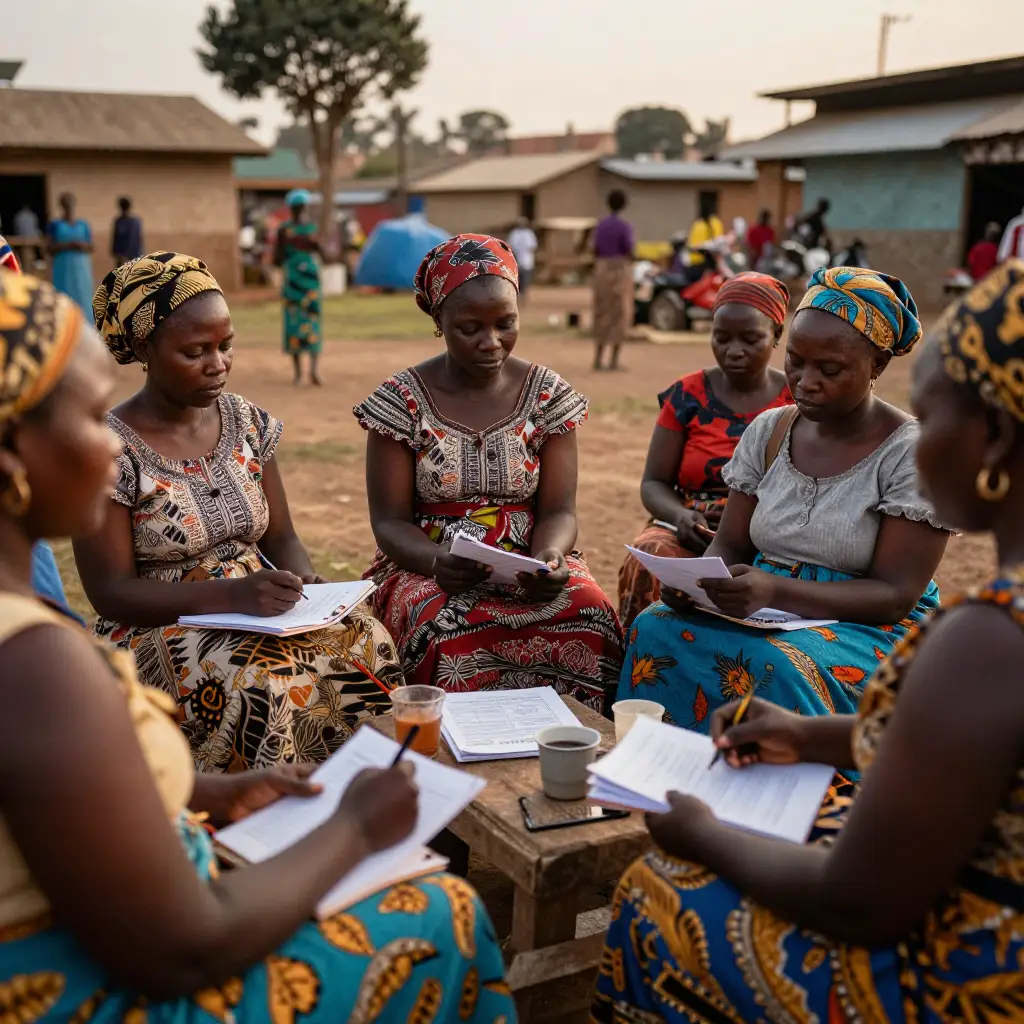
Across Kenya, a dense ecosystem of informal savings and investment groups — known as chamas — has emerged as a primary financial safety net for millions of households. Kenya’s approximately 300,000 chamas collectively manage an estimated KSh 300 billion (around US$2.3 billion) in assets, according to industry estimates. Unlike microfinance institutions, which are typically externally capitalised and carry market interest rates, chamas are internally governed and embedded in social accountability structures. Evidence from FSD Kenya’s FinAccess surveys shows that over 5.6 million Kenyan adults — roughly one in four adults at the time of the survey — relied primarily on informal savings groups such as chamas and ROSCAs for savings and credit, including many who also held formal bank accounts. The groups are disproportionately led by women, and their financial decisions ripple across households and communities. Kibera, Nairobi’s largest informal settlement, hosts hundreds of such groups operating where formal banking infrastructure is absent or inaccessible. The lesson: solidarity finance at scale is already happening. Development researchers need to study it, not invent it.
A Research Agenda for the Solidarity Economy
If the evidence for SSE’s transformative potential is mounting, the gap between that evidence and mainstream development research remains wide. Closing it will require changes that are simultaneously technical and political.
Measurement systems need redesigning, as most national statistics were built to count capitalist enterprise and simply cannot see SSE at scale. Without internationally comparable data on SSE composition, employment, and impact, arguments for solidarity economy remain vulnerable to the charge that they are anecdotal. With it, the evidentiary foundation for policy change becomes solid.
Financing frameworks need expanding beyond return-on-investment logics that are structurally blind to social and ecological value. A cooperative dairy that keeps 200 rural households solvent, reduces food insecurity, and maintains watershed health may generate a negligible financial return while producing enormous social and ecological value. Research that develops rigorous, practical methodologies for quantifying that full value , e.g., including avoided public costs in healthcare, unemployment, and social services , would dramatically expand the investment case.
Research methodology needs democratising. So that SSE organisations become knowledge producers, not just objects of study. The best research in this field has consistently come from working with communities rather than on them. Participatory approaches and community-led evaluation tend to produce better knowledge precisely because the people closest to a problem usually understand it most clearly.
The slowest change may also be the deepest. An economics training curriculum that treats cooperatives as footnotes and social enterprise as a business school elective produces practitioners who can optimise existing systems but struggle to conceive of different ones. That is a curriculum problem that must be tackled for SSE research to truly find its place.

The Most Important Question
Development research has never been purely technical. Its choice of questions, methods, and frameworks reflects, and reinforces, assumptions about what kinds of economies are possible, desirable, and worth building. For decades, those assumptions have been shaped by neoclassical orthodoxy: that markets allocate efficiently, that growth is the primary metric of progress, and that the task of development is to integrate peripheral economies into the global capitalist system on the best available terms.
The polycrisis — climate change, inequality, democratic erosion, ecological collapse — is not an external shock to this system. It is, in significant part, its product. Continuing to research our way toward the same destination will not produce different outcomes.
“Now more than ever the question of how humanity moves forward toward more liveable worlds in solidarity is an urgent one.”
— Safri et al., 2024, p. 185
The case studies explored here — Mondragon’s crisis resilience, GLS Bank’s sustainable finance model, Kibera’s grassroots capital — are not feel-good stories. They are empirical evidence, amenable to analysis, replication, and theoretical development. The harder question is not whether solidarity economies work. It is whether the institutions that fund and shape development research have sufficient interest in answers that might unsettle their own operating assumptions.
279M+
people worldwide employed by or through cooperatives — nearly 10% of the global workforce (ILO)
REFERENCES & FURTHER READING
- Bergeron, S. & Healy, S. (2013). Beyond the Economy of Beauty. Feminist Economics.
- Kenter, J. et al. (2025). Bridging Neoclassical and New Economic Frameworks in the Age of Polycrisis.
- International Labour Organization (2022). Cooperatives and the World of Work. ILO Geneva.
- Kenya National Bureau of Statistics (2023). FinAccess Household Survey. KNBS Nairobi.
- Laville, JL. (2023). The Solidarity Economy. University of Minnesota Press.
- Safari, A. et al. (2024). Worker Cooperatives and Local Economic Multipliers: Evidence from New York City. Journal of Economic Alternatives.
- Safari, A, Pavlovskaya, M., Healy, S., & Borowiak, C. (2024). Solidarity Cities: Confronting Racial Capitalism, Mapping Transformation. University of Minnesta Press.
- United Nations General Assembly (2024). Resolution on Promoting the Social and Solidarity Economy for Sustainable Development. A/RES/79/XX.