
Dr. Kristie Drucza and Kate Learmonth
Anti‑gender movements are reshaping policy environments in ways that directly affect the impact and sustainability of donor investments in sexual and reproductive health and rights (SRHR) (Corredor 2019; IPPF 2024). Yet work from Latin America, Europe and the Asia Pacific shows that with the right strategies, funders can still help secure and defend major SRHR gains, even in hostile contexts (Yamin 2023; APTN 2022; ActionAid/Monash GRACC 2019).
Narratives about so‑called “gender ideology” are being used to attack comprehensive sexuality education (CSE), LGBTIQ+ (lesbian, gay, bisexual, trans, intersex and queer) rights and access to abortion, undermining enabling environments for maternal health, HIV, adolescent wellbeing and gender‑based violence programming (Corredor 2019; IPPF 2024). At the same time, the four case examples in this blog show that it is still possible to win and consolidate important gains.
SRHR is not a niche concern. Complications from pregnancy and childbirth remain a leading cause of death for adolescent girls in many low and middle-income countries, and hundreds of millions of women still have an unmet need for modern contraception, with consequences for health, education and economic participation (IPPF 2024; Centre for Reproductive Rights 2025). When SRHR is neglected, it becomes much harder to advance broader global commitments on health, gender equality, education and reducing inequalities that sit at the heart of today’s development agenda (DFAT 2023; Asia Pacific Alliance 2024).
This blog highlights four examples that offer practical lessons for Asia Pacific funders: Argentina and Fiji’s use of constitutional framing; Vanuatu’s integration of GBV and SRHR into climate resilience; Pacific cooperation with churches on CSE; and Thailand’s path to marriage equality. Together, they suggest what it looks like to fund SRHR work that is honest about backlash yet still focused on progress.
Back legal and policy advocacy that is locally grounded
Argentina’s legalisation of abortion in 2020 is now a touchstone in debates on rights‑based advocacy. Campaigners framed abortion as both a public health and constitutional issue, invoking specific provisions of the Argentine constitution and CEDAW, and combining this with robust national data on deaths from unsafe abortions (Yamin 2023; Ramos 2023). A small, expert coalition of lawyers, feminist activists and clinicians worked with legislators to draft strong legislation and pre‑prepare clinical protocols for implementation in public facilities (Ramos 2023). This work was supported by dedicated SRHR funders such as the Safe Abortion Action Fund and initiatives like IPPF’s Global Comprehensive Abortion Care Initiative, which channel flexible resources to feminist legal and service-delivery partners. Early evaluations indicate reductions in clandestine procedures and related maternal morbidity and mortality since the law’s passage (Yamin 2023).

Fiji’s decriminalisation of same‑sex relations in 2010 illustrates how similar legal strategies can succeed in a conservative, faith‑dominated setting. Colonial‑era sodomy provisions had criminalised consensual same‑sex acts, hampering HIV prevention and reinforcing stigma (UNAIDS 2010). LGBTIQ+ networks and health advocates mounted constitutional challenges, arguing that these provisions violated domestic equality and privacy rights; the High Court’s decision led to the Crimes Decree 2010, which removed sodomy offences and introduced gender‑neutral definitions focused on non‑consensual acts (APTN 2022). UNAIDS links this reform to improved HIV outreach and reduced fear among men who have sex with men in seeking services (UNAIDS 2010).
More recent reforms in the Cook Islands, where consensual same‑sex relations were decriminalised in 2023, show the power of long‑term, ground‑based advocacy that brings together local LGBTIQ+ organisations, churches and women’s groups. Community‑led norms and wellbeing research helped document stigma, violence and health impacts in ways that resonated with local values and decision‑makers, building an evidence base that strengthened both community campaigns and legal arguments.
For donors, these stories show why it matters to back legal and policy work rooted in domestic constitutions, jurisprudence and public health evidence, rather than relying only on international norms (FES 2010; GATE 2024). Funding for constitutional analysis, strategic litigation, data generation, coalition‑building with professional associations and community groups, and the co‑design of implementation protocols and communication products can shift how whole systems operate, especially when supported by flexible, multi‑year grants (Civicus 2025). In parallel, investments in language justice and narrative work – such as community‑driven efforts to reframe SRHR in locally meaningful terms, and campaigns like IPPF’s Words to Win – help make sure legal changes are understood, defended and implemented in practice.
Frame SRHR as safety, well-being and resilience (for the community and individual), not just “rights”
European experience shows that how SRHR is framed can make or break reform. In response to attacks on LGBTIQ+ inclusive education framed as “indoctrination”, organisations such as ILGA‑Europe tested alternative narratives and found that messages centred on child safety, bullying prevention and dignity resonated best with undecided parents (ILGA‑Europe 2022a; Align 2024). Shifting from abstract rights language to messages such as “every child deserves dignity and love” helped move debates away from ideology and towards widely shared concerns about wellbeing (ILGA‑Europe 2022a; CoE 2021).
Vanuatu demonstrates how similar interest‑based framing can be adapted in a Pacific small island state. The country faces high exposure to cyclones and earthquakes alongside high rates of gender‑based violence (ActionAid/Monash GRACC 2019). Research by ActionAid and Monash University documents how disasters intensify violence against women and girls and disrupt access to contraception and maternal health care, reinforcing the need to see SRHR as essential to safety and resilience rather than an optional add‑on (ActionAid/Monash GRACC 2019). The national Gender and Protection Cluster, led by the Department of Women’s Affairs and supported by organisations such as CARE, has been quick to complete gender and protection analyses after major cyclones, providing an evidence base that informs response and recovery initiatives and keeps women’s safety and wellbeing at the centre.
In response, government and civil society actors have integrated GBV referral pathways, SRHR services and women’s leadership into disaster and climate resilience planning, with support from initiatives such as the EU–UN Spotlight Initiative and other regional gender and resilience programmes (UNFPA/Spotlight Initiative 2023; DFAT 2023). Crucially, these reforms are presented not as “gender ideology”, but as core to “family resilience” and community survival in the face of climate change, drawing on women’s kastom knowledge and leadership (ActionAid/Monash GRACC 2019). Reporting indicates that services have reached thousands of women post‑cyclone and that targeted communities are reporting reductions in violence, even as longer‑term evaluation continues (UNFPA/Spotlight Initiative 2023).
For donors, this points to SRHR investments that are designed and communicated as contributions to shared public goods (e.g., child safety, education, disaster preparedness, and climate resilience) rather than as stand‑alone rights projects (DFAT 2023; APF 2025; Centre for Reproductive Rights 2025). In practice, that includes backing the analytical work of Gender and Protection Clusters and other coordination bodies that can quickly document risks and needs after crises, and then translate those findings into language that speaks to local priorities around safety, wellbeing and resilience.
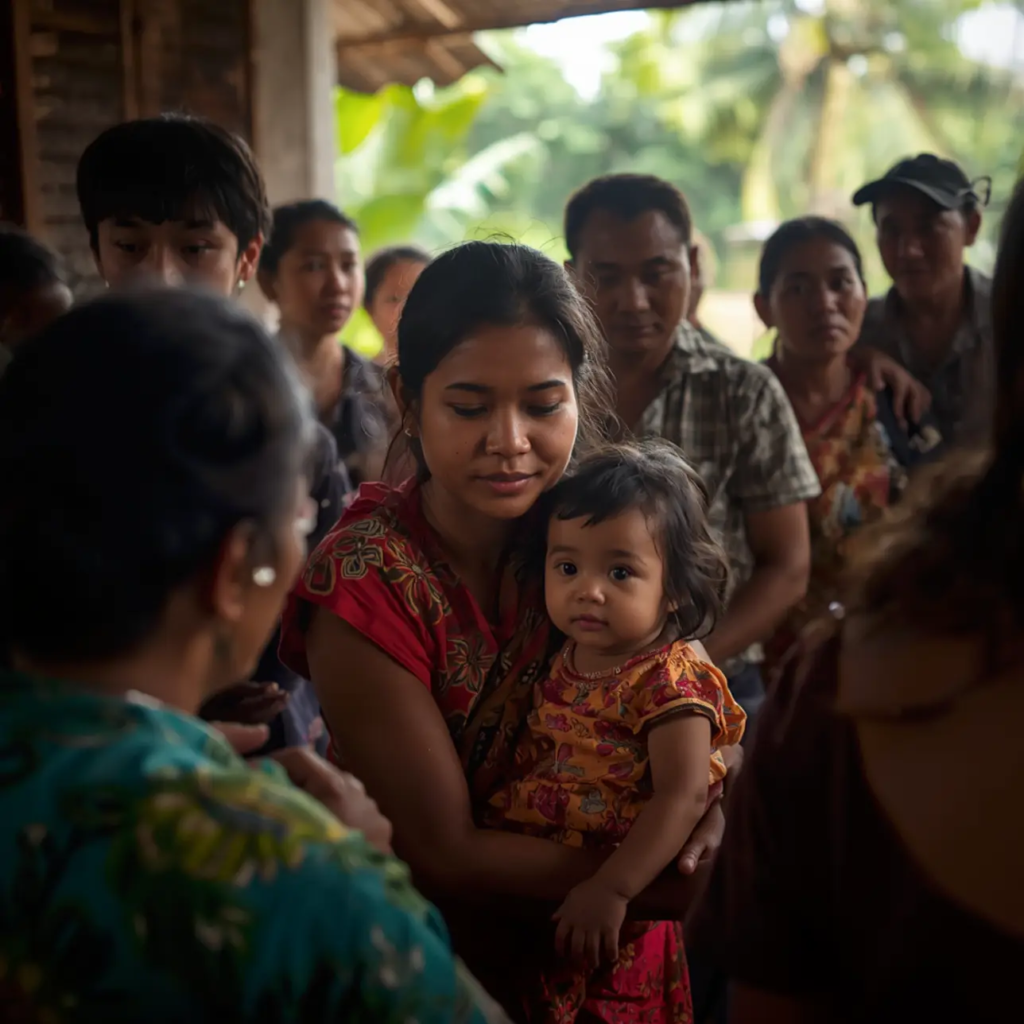
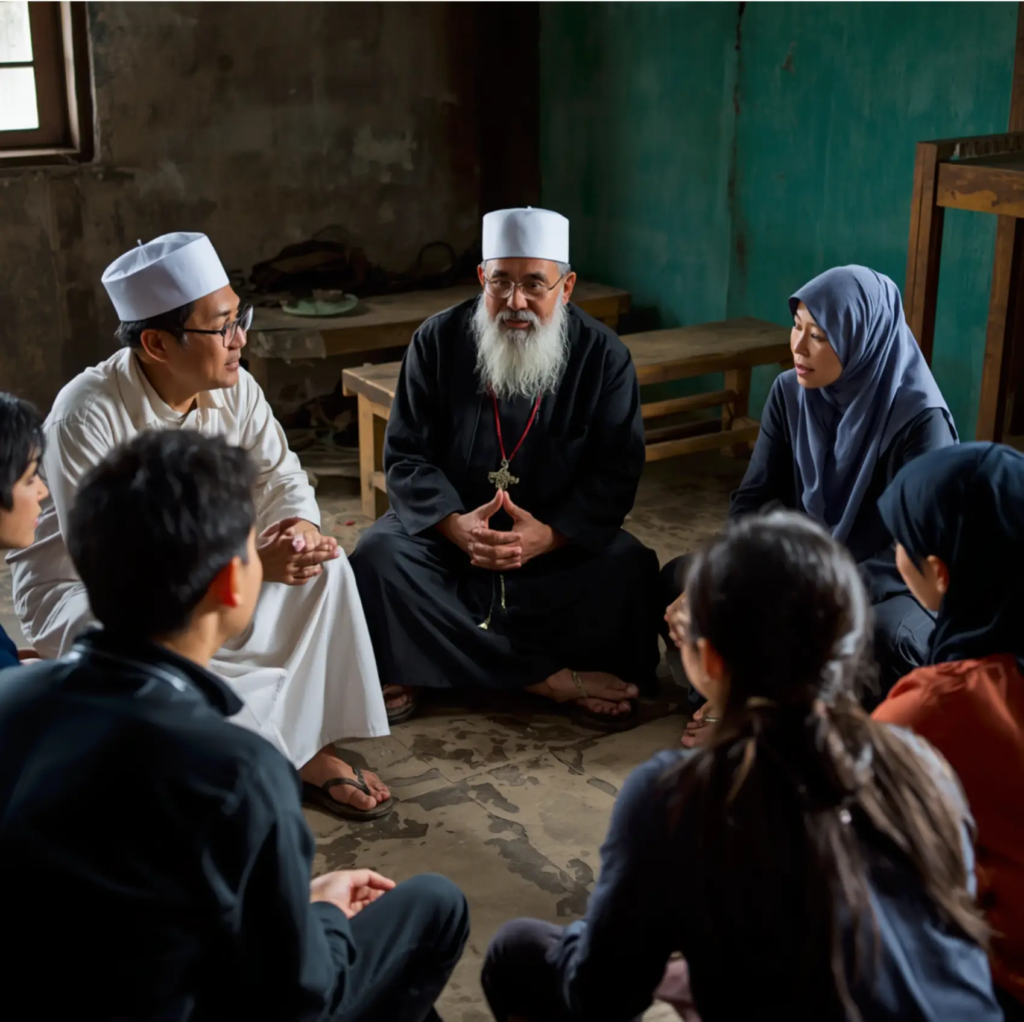
Work with, not just against, faith actors
Religious institutions are central to social and political life across much of the Asia Pacific, especially in debates about young people’s sexuality (SPC HRSD 2021; HRW 2022). In many Pacific states, churches have helped block or delay CSE reforms by framing them as Western impositions (SPC HRSD 2021; HRW 2022). Yet there is evidence that sustained, respectful engagement can shift this dynamic and position faith actors as partners in advancing safety, wellbeing and dignity for young people.
The Pacific Community’s Human Rights and Social Development Division and UNFPA document how ministries, educators and development partners in Fiji and Vanuatu have worked with Anglican and Catholic leaders to co‑develop CSE materials that emphasise family values, responsibility and protection from violence, using talanoa‑based dialogues to surface concerns and adapt curricula to reflect both evidence‑based SRHR content and faith‑friendly framing (SPC HRSD 2021; PSGDN/IWDA 2023). Regional reporting points to reductions in teen pregnancy and improved knowledge around consent following CSE roll‑out in these settings, with some pastors publicly endorsing the programmes (SPC HRSD 2021; IWDA 2024).
Pacific feminist and decolonial perspectives stress that such engagement should be rooted in recognition of Indigenous knowledge and pre‑colonial understandings of bodily autonomy, rather than reinforcing external authority (Pacific Feminist Forum 2023). Kastom networks and community dialogues can serve as early‑warning systems for backlash and as spaces where alternative, locally legitimate narratives of SRHR are crafted (Pacific Feminist Forum 2023). Regional coalitions such as the Pacific Feminist SRHR Coalition, the Pacific SRHR Working Group and the Asia Pacific Alliance for Sexual and Reproductive Health and Rights are already working across denominations and faith traditions to support inter‑faith dialogue on SRHR, and represent key partners for donors seeking to back this work at scale.
Donors have a role here too: resourcing faith literacy and dialogue skills for SRHR partners, supporting multi‑stakeholder convenings that include religious leaders, working with existing feminist and SRHR coalitions to strengthen inter‑faith collaboration, and avoiding grant conditions that push partners into polarising “culture war” framings (FES 2010; GPP 2018; GATE 2024; IPPF 2024).
Fund the long game: Thailand’s marriage equality reform
Thailand’s 2025 law recognising marriage for same‑sex couples is a landmark for Southeast Asia and has important implications for SRHR and legal protection for LGBTQ+ communities (Library of Congress 2025; Thai PRD 2025). The reform was the outcome of more than two decades of organising by Thai LGBTIQ+ and human rights groups within a political context marked by military coups and conservative norms, with organisations combining strategic litigation, public education and engagement with political parties, and repeatedly adapting strategies as governments changed (Thai Anti‑Human Trafficking Action 2025; Library of Congress 2025). Regional initiatives such as FP2030’s work to secure government commitments on family planning and strengthen SRHR data systems provide an important complementary layer, helping embed SRHR and equality concerns in policy frameworks and accountability mechanisms, including through improved data disaggregation and regular reporting on who is being left behind.
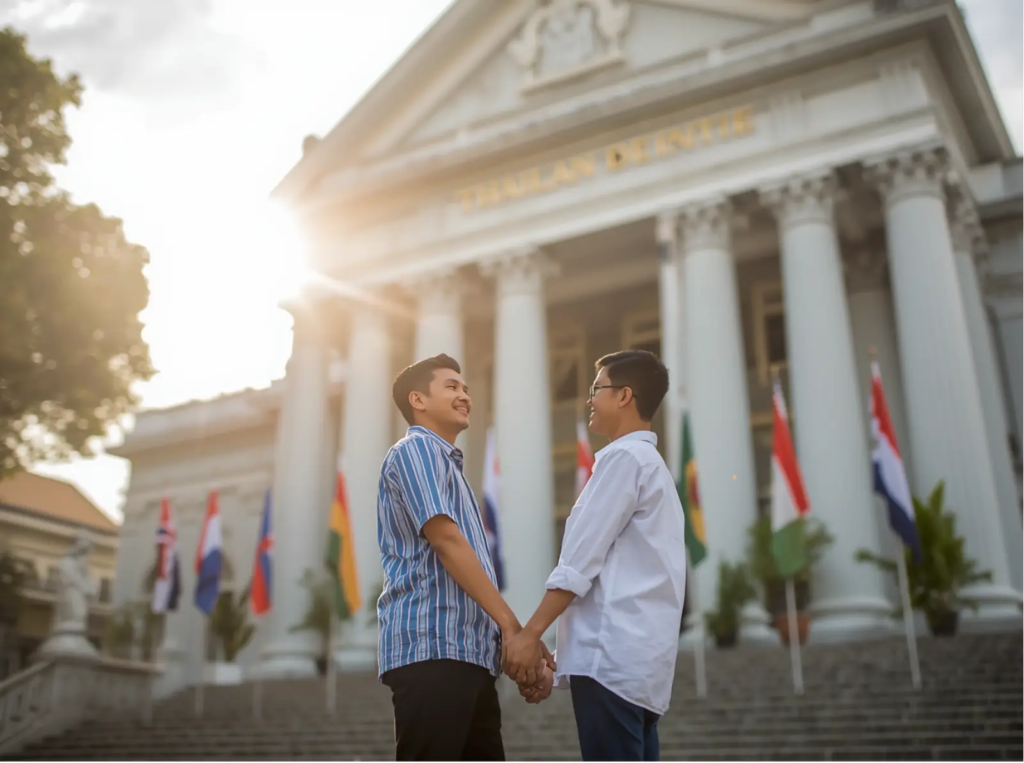
Values‑based messaging was central throughout. Campaigns framed marriage equality in terms of fairness, love and family recognition, highlighting real couples and arguing that extending legal protections would strengthen Thai families and society (Thai PRD 2025; Library of Congress 2025). Over time, this helped normalise diverse sexual orientations, gender identities and expressions, and sex characteristics (SOGIESC) in public discourse and build cross‑party support, even as neighbouring countries pursued more restrictive approaches and gendered disinformation against LGBTIQ+ communities (Thai PRD 2025; ILGA‑Europe 2024).
Thailand’s experience illustrates the time horizons and capacities required to achieve major legal reforms. This includes sustained investment in narrative development, coalition building, legal expertise and public opinion research, alongside the flexibility to pivot when political circumstances shift (GATE 2024; Kirey‑Sitnikova 2024). Short funding cycles and tightly earmarked project grants simply do not fit this kind of work; flexible, core and multi‑year funding, aligned where possible with broader SRHR and family planning commitments, give movements a much better chance of success (GPP 2018; Civicus 2025).

What this means for donors
Looking across these examples, a few funding principles stand out for backlash‑aware SRHR work in the Asia Pacific. Donors need to plan for backlash from the outset, set aside funds for monitoring and rapid response, and ensure partners are not left to face escalated opposition on their own (GATE 2024; IPPF 2024). They should back a mix of locally led strategies to counter opposition – legal advocacy, narrative work, alliance‑building with faith and non‑faith actors, and security and wellbeing – instead of treating these as add‑ons to “core” programming (Countering Backlash 2022; TGEU 2024). This also means resourcing the physical, digital and psychosocial safety of SRHR advocates and human rights defenders, who are often targeted precisely when their work is most effective. Beyond individual grants, donors can help build shared infrastructure, such as information hubs and communities of practice that track international anti‑rights actors and their influence on local elections and legislation. These platforms can support partners to understand and respond to projects like “Project 2025” and American faith‑based anti‑rights efforts in the Pacific.
The way money is provided matters as much as where it goes. Constitutional litigation, narrative change and deep coalition‑building rarely fit neatly inside short project cycles and tightly specified outputs (GPP 2018; Civicus 2025). Flexible, core and multi‑year funding aligned with broader SRHR and equality commitments is much better suited to the long‑term, adaptive work illustrated in Argentina, Vanuatu, Pacific faith engagement and Thailand. Finally, funders need to stay close to local partners’ analysis of which frames, alliances and organisational models make sense in each context, and be ready to back approaches that do not look like familiar “rights‑based projects” but are more likely to protect SRHR gains and unlock wider development progress in a diverse and contested region (DFAT 2023; Asia Pacific Alliance 2024).
References
ActionAid/Monash GRACC 2019, Gender-responsive climate action in Vanuatu: A policy brief, ActionAid Australia and Monash University Gender, Peace and Security Centre, Melbourne and Clayton, <https://actionaid.org.au>
Align 2024, Six headlines from 2024: A seismic year for gender norms, ALIGN Platform, ODI, London, <https://www.alignplatform.org>.
APF 2025, Asia Pacific Forum of National Human Rights Institutions report on sexual and reproductive health and rights, Asia Pacific Forum of National Human Rights Institutions, Sydney, <https://www.asiapacificforum.net>.
APTN 2022, Legal gender recognition in Fiji, Asia Pacific Transgender Network, Bangkok, <https://weareaptn.org>.
Asia Pacific Alliance 2024, Queering sexual and reproductive health and rights in Southeast Asia, Asia Pacific Alliance for Sexual and Reproductive Health and Rights, Bangkok, <https://www.asiapacificalliance.org>.
Centre for Reproductive Rights. 2025. Asia toolkit: Sexual and reproductive health and rights in humanitarian settings. Centre for Reproductive Rights, New York. <https://reproductiverights.org>.
Civicus 2025, Gender rights: Backlash, resistance and persistence, in State of Civil Society Report 2025, CIVICUS: World Alliance for Citizen Participation, Johannesburg, <https://www.civicus.org>.
CoE 2021, Combating rising hate against LGBTI people in Europe, Council of Europe Commissioner for Human Rights, Strasbourg, <https://www.coe.int>.
Corredor, ES 2019, ‘Unpacking “gender ideology” and the global right’s anti-gender countermovement’, Signs: Journal of Women in Culture and Society, vol. 44, no. 3, pp. 613–638.
Countering Backlash 2022, Countering Backlash – Reclaiming gender justice, Countering Backlash Consortium, Institute of Development Studies, Brighton, <https://counteringbacklash.org>.
DFAT 2023, New International Gender Equality Strategy: Public submissions summary report, Department of Foreign Affairs and Trade, Canberra, <https://www.dfat.gov.au>.
FES 2010, Donor strategies amid backlash: Responding to challenges to women’s and LGBTI rights, Friedrich-Ebert-Stiftung, Berlin, <https://www.fes.de>.
FP2030 2024, FP2030 partnership: Asia and the Pacific regional hub, FP2030, Washington DC, <https://www.fp2030.org>.
GATE 2024, Recognising, documenting, and addressing anti-gender opposition: Guidance for activists and donors, GATE – Global Action for Trans Equality, New York, <https://gate.ngo>.
Gibson, K & McMillan, K 2024. ‘Decriminalisation of same-sex relations in Cook Islands’, Devpolicy Blog, Development Policy Centre, Australian National University, Canberra, <https://devpolicy.org/decriminalisation-of-same-sex-relations-in-cook-islands-20240415>.
GPP 2018, Advancing sexual and reproductive health and rights: Metrics toolkit for funders, Global Philanthropy Project, New York, <https://globalphilanthropyproject.org>.
HRW 2022, ‘“All this talk about morality”: Pacific church influences on sexual and reproductive health and rights’, Human Rights Watch, New York, <https://www.hrw.org>.
ILGA-Europe 2022a, Five things you can do to respond to the anti-gender discourse, ILGA-Europe, Brussels, <https://www.ilga-europe.org>.
ILGA-Europe 2024, Gendered disinformation in the context of LGBTI communities in Europe, ILGA-Europe, Brussels, <https://www.ilga-europe.org>.
IPPF 2022, Join our #WordsToWin campaign, blog post, International Planned Parenthood Federation, London, <https://en.ippf.org/blog/join-our-wordstowin-campaign>.
IPPF 2023, Global Comprehensive Abortion Care Initiative (GCACI), International Planned Parenthood Federation, London, <https://www.ippf.org>.
IPPF 2024, Unveiling subversive power: Anti-rights actors in Asia-Pacific, International Planned Parenthood Federation East and Southeast Asia and Oceania Region, Kuala Lumpur, <https://eseaor.ippf.org>.
IWDA 2024, Faith, feminism and sexual and reproductive health and rights in the Pacific, International Women’s Development Agency, Melbourne, <https://iwda.org.au>.
Kirey-Sitnikova, Y 2024, ‘Transgender activism in Kazakhstan, Kyrgyzstan and Tajikistan’, Central Asian Survey, vol. 43, no. 1, pp. 1–20.
Koroi, T, Ratuva, S, Faasisila, T, et al. 2019, Women’s wellbeing and intimate partner violence in the Cook Islands: National survey report, Kirby Institute, UNSW Sydney, Sydney, <https://www.kirby.unsw.edu.au>.
Library of Congress 2025, Thailand: Law recognising same-sex marriage takes effect, Global Legal Monitor, Law Library of Congress, Washington DC, <https://www.loc.gov/item/global-legal-monitor>.
Pacific Feminist Forum 2023, Manifesto for Pacific bodily autonomy, Pacific Feminist Forum, Suva, <https://pacificfeministforum.com>.
PSGDN/IWDA 2023, Talanoa for transformation: Working with faith leaders on SRHR in the Pacific, Pacific Sexual and Gender Diversity Network and International Women’s Development Agency, Suva and Melbourne, <https://psgdn.org>.
Ramos, S 2023, ‘Building Law 27.610: Feminist legal mobilisation in Argentina’, Health and Human Rights Journal, vol. 25, no. 2, pp. 145–160.
Safe Abortion Action Fund 2024, Safe Abortion Action Fund website, Safe Abortion Action Fund, London, <https://saafund.org>.
SPC HRSD 2021, Pacific handbook for human rights, gender equality and social inclusion in comprehensive sexuality education, Human Rights and Social Development Division, Pacific Community, Noumea, <https://www.spc.int>.
Thai Anti-Human Trafficking Action 2025, Thailand’s Marriage Equality Bill to take effect on 22 January 2025, Thai Anti-Human Trafficking Action Alliance, Bangkok, <https://thaita.org>.
Thai PRD 2025, Thailand’s Marriage Equality Law takes effect 22 January 2025, Public Relations Department, Royal Thai Government, Bangkok, <https://thailand.prd.go.th>.
TGEU 2024, Resisting raids: Trans networks, safety and security in Europe, Transgender Europe, Berlin, <https://tgeu.org>.
UNAIDS. 2010. Country progress report: Fiji. Joint United Nations Programme on HIV/AIDS, Geneva. <https://www.unaids.org>.
UNFPA/Spotlight Initiative 2023, Ending violence against women and girls in the Pacific: Results report, United Nations Population Fund Pacific Sub-Regional Office and EU–UN Spotlight Initiative, Suva, <https://www.unfpa.org>.
WHO 2022, Finding a path to language justice in sexual and reproductive health and rights, feature story, World Health Organisation, Geneva, <https://www.who.int/news-room/feature-stories/detail/finding-a-path-to-language-justice-in-sexual-and-reproductive-health-and-rights>.
Yamin, AE 2023, ‘Abortion, human rights and health systems: Reflections from Argentina’s Law 27.610’, Global Public Health, vol. 18, no. 10, pp. 1–17.