
Dr. Kristie Drucza
If you care about genuine gender equality, decolonial research, and shifting power to local experts, this blog is for you.
Imagine a world where research about women, young people, people with disabilities, Indigenous peoples, and other marginalised groups is actually led by them. Where consulting profits don’t just disappear into overheads, but are reinvested into training and mentoring the next generation of locally based researchers around the world. That’s the world Includovate is trying to build.
Who We Are
Includovate is a feminist research incubator and certified social enterprise that designs solutions to inequality and exclusion. Founded in 2019, we were created to respond to poor-quality data on gender norms and social exclusion, and the persistent failure of mainstream development to reach the most marginalised.
We are women‑led and women‑majority, with a global network of around 700 researchers and collaborators, 62% of whom are women. We reinvest most of our profits to strengthen the data and inclusion capabilities of researchers and practitioners, so that more locally based experts can lead analysis, authorship, and decision-making rather than remain on the margins.
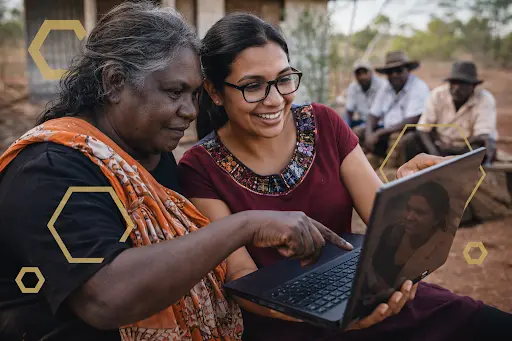
We also work in higher-income settings with communities who continue to experience systemic exclusion, including Indigenous peoples such as Australia’s First Nations communities, partnering with Indigenous and regional thinkers and researchers.

What We Do
So what does that look like in practice?
We work with NGOs, UN agencies, governments, and social enterprises to make their policies, programmes, and systems more inclusive and gender‑transformative. Our teams deliver applied research, mixed‑method evaluations, policy and legislative reviews, gender and inclusion audits, impact assessments, and practical toolkits and strategies.
We also bring strong monitoring and evaluation skills to every engagement:
- Co‑developing program logics and theories of change.
- Designing results chains that show how change happens for different groups.
- Building M&E frameworks that integrate gender, disability, and social inclusion indicators from the start.
Beyond research and M&E, we develop strategies that help organisations turn evidence into action:
- Funding and resource‑mobilisation strategies aligned with GEDSI goals.
- Country programme strategies that embed inclusion across sectors like livelihoods, health, education, food systems and climate.
- Engagement strategies to reach those most excluded—people with disabilities, adolescents, Indigenous communities, and people facing overlapping discrimination.

And we support more inclusive organisations through our DEI and GEDSI advisory and digital products. Includovate Pro and the Learning Hex are digital learning and community platforms that package our feminist, decolonial DEI methods into structured courses, toolkits and facilitated learning spaces for NGOs, donors, and corporate ESG teams.
We don’t just design one‑off workshops—we create training manuals and full GEDSI training programs that build comprehensive inclusion capacity within organisations. These programmes cover topics such as participatory methods, outcome harvesting, inclusive research ethics, disability inclusion, and practical tools for integrating GEDSI into everyday decision‑making.
Since 2019 we’ve delivered around 90–95 complex research and evaluation projects, including multi‑country initiatives on SRHR, disability inclusion, youth economic empowerment, food systems and climate, across roughly 22–48 countries.

How We Support Researchers to Publish and Lead
Includovate was established not just to conduct research, but to incubate researchers and change who is recognised as an expert.
- We have trained 214 researchers from low‑ and middle‑income countries in research ethics and inclusive practices, including gender, diversity, equity and disability inclusion.
- Our contractor database has grown to 2,184 researchers across 137 countries, with 54% women, giving underrepresented researchers the chance to lead high‑profile work.
- Staff and associates from under‑represented regions have published 96 blogs, contributed to 27 knowledge products, three peer‑reviewed journal articles (with two more submitted), and fourteen book chapters—including an edited volume on centring gender in digital and green transitions.
- By 2025, at least 19 Includovate‑affiliated researchers had authored or co‑authored 3 journal articles and 14 book chapters, with 30 of those authors coming from underrepresented regions.
Through mentoring, pairing early‑career researchers with experienced leads, and co‑authoring knowledge products, we help researchers build their reputation, in some cases more than doubling their salaries and moving into roles with the UN and international research firms.
How We’re Different
Includovate exists because the usual approach to development research isn’t working. Too often, external consultants fly in, extract data, and publish behind paywalls, while local researchers and communities are sidelined.
We do things differently in three key ways:
- Shifting power to local experts
We systematically hire, train, and mentor national and community‑based researchers, and our social‑licence “sistership” model supports women‑owned research firms in growing their own markets. - From research to strategy, M&E and organisational change
Our work moves from evidence to practical funding strategies, country programme strategies, DEI and inclusion strategies, M&E systems, and GEDSI training programs and manuals—so partners can redesign programmes, shift budgets and strengthen their internal capabilities. - Ethics, safeguarding, and inclusion at the centre
Our Institutional Review Board has cleared at least 42 studies, and we embed safeguarding buddies and trauma‑informed protocols in sensitive work with children, survivors of violence, and other at‑risk groups.

Our Impact: Inclusive Systems and Organisations
What does this look like on the ground?
- We have completed more than 95 research and evaluation projects since 2019, with revenues growing to AUD 1.64 million in 2024–25, allowing us to reinvest about 78% of profit into staff training and capacity development.
- Our evidence has informed reforms and debates on childcare as economic infrastructure in Ethiopia, disability‑inclusive rural development, inclusive SRHR, and economic governance facilities like Prospera.
- DEI and GEDSI evaluations have helped partners integrate inclusion into facility logic models, monitoring systems, and organisational policies, moving from compliance to genuine culture and systems change.
- Through Includovate Pro, the Learning Hex, and bespoke GEDSI training programmes, we help organisations at different stages of their inclusion journey build practical skills, internal champions, and communities of practice.
Every consultancy we deliver feeds back into this ecosystem—funding new research, supporting more researchers to publish, and helping organisations become more inclusive from the inside out.

Call to Action
If you are a donor, NGO, social enterprise, government agency, or company looking to:
- Strengthen gender equality, disability inclusion and social justice in your programmes.
- Develop funding strategies, country programme strategies, or engagement strategies that reach the most excluded.
- Design or strengthen program logics, results chains, and M&E frameworks with a strong GEDSI lens.
- Support researchers to publish and take the lead in high‑quality, ethical, inclusive research.
- Build more inclusive organisations through DEI advisory, Includovate Pro, Learning Hex, and tailored GEDSI training manuals and programmes.
…then we would love to work with you.
Visit includovate.com to learn more about our services and impact. If this vision resonates with you, subscribe, like this video, and share it with someone who cares about doing development differently.