
You have heard of business incubators before, but research incubation … that is new. Just like how a business incubator develops business acumen, Includovate develops research competencies through a structured research incubation model.
Includovate’s research incubator model
Includovate supports early-career researchers and marginalised researchers through an integrated research incubator model that combines training, mentoring, leadership opportunities and ethical practice within real-world projects. This research incubation approach aims to shift power to local experts, particularly women, people with disabilities and young professionals from low- and middle-income contexts, so that they can lead inclusive and evidence-based development.
Includovate’s research incubator embeds structured learning, mentoring and hands-on experience into every project, rather than treating capacity building as a separate activity. Early-career researchers are engaged through internships, volunteering and short- and long-term paid roles, ensuring they gain both technical and professional experience in participatory and inclusive research as part of a sustained research incubation process.
The model is designed to address unequal access to opportunity, rather than a lack of talent, by intentionally targeting researchers from low- and middle-income contexts and underrepresented groups. This aligns with broader evidence that locally led research improves the relevance and uptake of development interventions (Ahmed & Patel 2021; Smith 2020).

Publishing inequities for researchers in low- and middle-income contexts
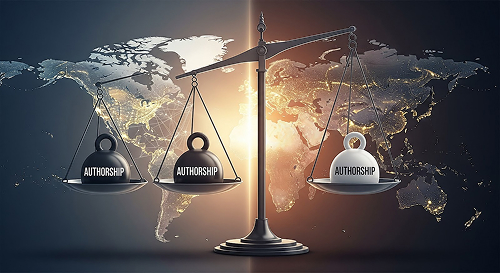
Researchers based in low- and middle-income countries are significantly under-represented in academic publishing, despite contributing much of the data and fieldwork that underpin global research agendas (Kraemer-Mbula et al. 2023; Nature 2023). This underrepresentation is one of the gaps that Includovate’s research incubation model explicitly seeks to address by supporting early-career researchers to publish and lead research from their own contexts
Bibliometric studies show that researchers from low- and middle-income countries hold a minority of first- and last-author positions in many global health and development journals, even when studies are conducted in their own countries (Kraemer-Mbula et al. 2023). One analysis of influential development journals found that only about 16% of nearly 25,000 articles over three decades were authored by scholars based in these contexts, highlighting a persistent imbalance in who shapes the literature (Nattrass & Cramer 2021).
Across natural science journals tracked in the Nature Index, collaborations between institutions in high-income countries and those in low- and middle-income countries accounted for only around 2.7% of all publications between 2015 and 2022, with authorship still weighted almost three-to-one in favour of institutions in high-income countries (Nature 2023). Pure collaborations among institutions in low- and middle-income countries were extremely rare in the same dataset, underscoring how researchers in these settings remain marginal in setting research agendas and leading multi-country collaborations (Nature 2023).

Researchers in low- and middle-income countries also face structural barriers, including limited access to research funding, language constraints in an English-dominated publishing system, and biases in editorial and peer-review processes (Abimbola et al. 2023; Kraemer-Mbula et al. 2023; Meneghini & Packer 2025). These obstacles restrict opportunities to submit, publish and gain recognition, reinforcing a cycle in which institutions in high-income countries dominate authorship, citations and decision-making in global science (Abimbola et al. 2023; Kraemer-Mbula et al. 2023).
Includovate’s focus on mentoring early-career researchers in low- and middle-income countries, supporting them in co-authoring publications and translating research into policy-relevant outputs, directly responds to these inequities. By helping cover publishing costs, providing structured research incubation opportunities, and promoting collaboration within and between regions, Includovate increases the visibility and leadership of these researchers in the academic record (Kraemer-Mbula et al. 2023)
Training, mentoring and ethical practice
Over 214 early-career researchers from low- and middle-income countries have received training in feminist participatory action research, photovoice, focus groups, transect walks, liberating structures, interview techniques, coding and research ethics through Includovate-led research incubation projects. Continuous mentoring across the project cycle enables researchers to apply these methods in practice, from tool design to data collection and analysis as part of a coherent research incubation pathway.
Ethics, safeguarding, and professional standards are central, with all researchers trained in child protection, safeguarding, and data privacy under the oversight of an internal Institutional Review Board (IRB). This governance structure ensures research spaces are safe, inclusive, and accountable, consistent with social research ethics guidelines.
Leadership, co-creation and visibility
Early-career researchers are supported to move beyond technical roles into leadership positions, including co-leading fieldwork, designing research questions, facilitating community engagement and contributing to dissemination. Youth-led studies, participatory workshops and peer-to-peer learning spaces provide practical opportunities to exercise these leadership skills within Includovate’s research incubation model.
Knowledge production is framed as a collaborative process, with early-career researchers co-creating outputs such as reports, policy briefs, infographics, and other creative products, often as co-authors or named contributors, thereby positioning them as visible experts in their fields and alumni of a rigorous research incubation program. They are also encouraged to build an online presence through blogging, social media and webinars, which helps position them as visible experts in their fields.


Networks and collaboration across regions
Includovate deliberately connects researchers across geographies through multidisciplinary teams and cross-country projects, fostering collaboration both within and across regions. These relationships create a global network of peers and mentors that supports long-term career development and encourages the exchange of contextual knowledge.
This networked approach to research incubation contributes to a more equitable global research ecosystem, where those closest to social challenges participate in setting research agendas and interpreting findings (Abimbola et al. 2023; Chilisa 2019). It also strengthens the legitimacy and uptake of research outcomes among local stakeholders and decision-makers (Abimbola et al. 2023; Chilisa 2019).
Inclusive recruitment and project experience
Recruitment practices intentionally prioritise diversity, creating opportunities for early-career and underrepresented researchers across countries and disciplines. Roles and responsibilities are tailored to promote growth, with researchers progressively taking on more complex tasks such as data analysis, presentation and stakeholder engagement.
Participation in a diverse portfolio of participatory projects—such as youth-led evaluations, multi-country gender equality assessments and photovoice initiatives—enables researchers to apply and refine their skills in different contexts. This breadth of experience builds adaptable practitioners who can address complex issues of inequality and exclusion.
Impact Through Lived Experience: What Our Interns Say
Past interns consistently describe the program as transformative, underscoring the value of Includovate’s model for funders seeking high-leverage, equity-driven impact. One intern from Tanzania noted, “Includovate didn’t just give me tasks; it gave me confidence, mentorship and a community that believed in my potential,” while another reflected that “the level of guidance, trust and real responsibility I received here is rare for early-career researchers—Includovate treats interns as emerging leaders, not assistants.”
Their reflections demonstrate how targeted investment in this research incubation model multiplies impact: each internship produces a researcher who goes on to influence policies, strengthen local institutions and advance inclusive development long after their placement ends. Strategic donor funding directly scales these outcomes, enabling more women and underrepresented talent from low- and middle-income countries to step into leadership and shape evidence-based change in their own contexts.

Why research incubation matters for donors
For donors and philanthropists, investing in Includovate is an investment in sustainable knowledge systems built through long-term research incubation that endures long after project funding ends. Each partnership generates policy-relevant evidence and strengthens local capacity, helping ensure that local experts lead future research and advocacy.
Indicative funding levels demonstrate tangible pathways for impact: around USD 3,000 can support a six‑month research internship; USD 5,000 can help a researcher from a low- or middle-income country to publish in an academic journal; USD 10,000 can fund a year‑long fellowship combining mentorship, fieldwork and leadership training; and USD 17,000 per year for four years can fund one person to do a PhD with an Australian university. Such investments directly contribute to global equity by supporting the next generation of inclusive researchers and advocates.
Inclusive research, as practised through Includovate’s research incubation model, does more than generate data; it changes who creates knowledge and whose experiences shape development policy and practice. By centring early-career researchers from marginalised backgrounds, and embedding ethics, mentorship and collaboration into every project, Includovate is helping build a more just and representative global research landscape.
Contact: [email protected] if you would like to partner with and support Includovate.
Box 1: Problematic Language
Includovate acknowledges that the term “Global South” is problematic because it perpetuates a simplistic North-South dichotomy that overlooks geographical inaccuracies, such as including northern hemisphere powerhouses like India and China while excluding southern nations like Australia (IP Quarterly 2023; Re-Design 2018). This binary framing homogenises diverse economies and cultures, implying a hierarchy in which the “South” appears subordinate or in need of Northern intervention, thereby reinforcing colonial power imbalances in knowledge production and development agendas (IP Quarterly 2023; Includovate 2023a). It also hinders nuanced policy discussions, especially in climate and aid negotiations, by grouping disparate states together despite rising powers challenging the narrative (IP Quarterly 2023; Int Policy Digest 2024).
Key Critiques and Better Alternatives
Better alternatives emphasise specificity and avoid binaries, aligning with decolonial principles by focusing on context, income levels, or regions rather than vague geographic or hierarchical labels (CETRI 2025). Recommended terms include low-income, lower-middle-income, upper-middle-income, or high-income countries based on World Bank classifications; “Majority World” or “Global Majority” to highlight demographic realities; and low- and middle-income countries (LMICs) for neutral aggregation in development data (Anti-Glossary 2025; PMC 2022). These options reduce homogenisation of diverse nations like Brazil and Sierra Leone, preventing colonial-era hierarchies while enabling targeted analysis (CETRI 2025; Carnegie Endowment 2023).
Includovate’s Approach
Includovate’s decolonial stance critiques such language for enabling extractivist models in which Northern agendas dominate, sidelining local voices, yet prioritises participatory, power-sensitive alternatives, such as regional descriptors (e.g., “Pacific Island countries” or “Southeast Asia”), to promote equity.
*All images are gendered by the Google Docs AI feature.
References
- Abimbola, S, Pai, M, Saini, M & Madhi, SA 2023, ‘Three pathways to better recognise the expertise of Global South researchers in global health’, BMJ Global Health, vol. 8, no. 8, e013111.
- Ahmed, R & Patel, S 2021, ‘Locally led research and development effectiveness’, Journal of Development Practice, vol. 12, no. 3, pp. 45–60.
- Anti-Glossary 2025, ‘“Anti-Glossary” of Contested Terms’, Research for International Students (blog), 20 February, https://researchintlstudents.com/anti-glossary/
- Carnegie Endowment 2023, ‘The Term “Global South” Is Surging. It Should Be Retired’, Carnegie Endowment for International Peace, 14 August https://carnegieendowment.org/posts/2023/08/the-term-global-south-is-surging-it-should-be-retired
- CETRI 2025, ‘Why It’s Time to Retire “Global North” and “Global South”’, Centre Tricontinental (CETRI), 22 December https://www.cetri.be/Why-It-s-Time-to-Retire-Global
- Chilisa, B 2019, Indigenous research methodologies, 2nd edn, SAGE, London.
- Economic and Social Research Council (ESRC) 2021, ESRC framework for research ethics, ESRC, Swindon.
- Includovate 2023a, We Need to Decolonise Research, Includovate, https://www.includovate.com/we-need-to-decolonise-research
- Int Policy Digest 2024, ‘The Geopolitical Reality of the Global South Terminology’, International Policy Digest, 4 May, https://intpolicydigest.org/does-global-south-need-to-be-retired/
- IP Quarterly 2023, ‘The Global South: A Problematic Term’, Internationale Politik Quarterly, 28 June, https://ip-quarterly.com/en/global-south-problematic-term
- Kraemer-Mbula, E, Tijssen, R, Gaillard, J & Cele, M 2023, ‘How to address the geographical bias in academic publishing’, BMJ Global Health, vol. 8, no. 12, e013111.
- Meneghini, R & Packer, AL 2025, ‘Global North–South science inequalities due to language barriers’, preprint, Zenodo, 19 February.
- Nattrass, N & Cramer, C 2021, ‘Researchers from Global South under-represented in development journals’, Nature, vol. 597, pp. 27–29.
- Nature 2023, ‘North–south publishing data show stark inequities in global science’, Nature, 13 December.
- PMC 2022, ‘How we classify countries and people—and why it matters’, BMJ Global Health (open access on PubMed Central), 31 May, https://pmc.ncbi.nlm.nih.gov/articles/PMC9185389/
- Re-Design 2018, ‘The “Global South” is a terrible term. Don’t use it!’, RE-DESIGN blog, 10 November, viewed 8 January 2026 http://re-design.dimiter.eu/?p=969
Smith, J 2020, ‘Equity in global research partnerships’, Global Policy, vol. 11, no. 2, pp. 150–162.